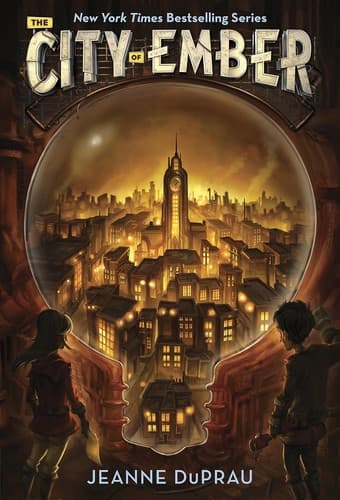
The City of Ember (2003)
About This Book
The city of Ember was built deep underground as a refuge for humanity, with supplies meant to last exactly 200 years, and now the lights that keep the city alive are flickering out. Twelve-year-old Lina and her friend Doon discover fragments of instructions left by the original builders and race to decode them before the last generator fails. DuPrau creates an atmosphere of creeping dread as the blackouts grow longer and the food supplies dwindle.
Why It's a Classic
Jeanne DuPrau's debut novel takes the classic dystopian setup and strips it down to its most elemental form: the lights are going out, and no one knows what lies above. The worldbuilding is remarkable in its specificity, from the way Ember assigns jobs by lottery on Assignment Day to the carefully rationed canned goods that are all that remain of the Builders' original provisions. Lina and Doon are compelling because their curiosity is genuine and their fear is real; they are not chosen ones fulfilling prophecy, just observant kids who notice things the adults have stopped questioning. The novel works as both a page-turning adventure and a meditation on what happens when a society becomes so dependent on its infrastructure that it forgets how to think about alternatives.
Fun Fact
DuPrau originally envisioned the story as an adult novel and worked on different versions of it for many years before reconceiving it as a book for young readers. She has said that the city of Ember was partly inspired by her anxiety about resource depletion and what would happen to a community that had literally forgotten there was a world outside its walls. The book's cover, showing a dark city lit by a single flickering bulb, became iconic in middle grade fiction.
Parent Note
The book's tension comes from a slowly failing city rather than from violence, making it accessible even for younger tweens who enjoy suspense. There are some corrupt authority figures and moments of genuine danger, but the overall tone is hopeful and problem-solving oriented.
Quick Facts
- Year
- 2003
- Type
- 📚 Book
- Category
- Fantasy / Sci-Fi
- Age Group
- Tweens (Ages 11–13)