Teens
Ages 14–17
Thought-provoking masterworks for young adults
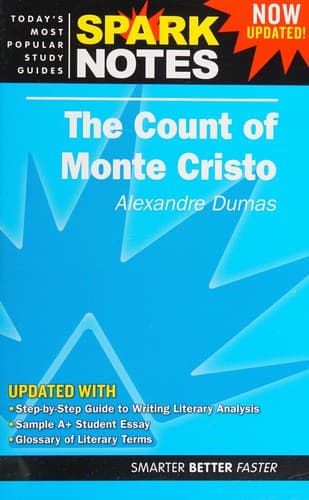
A wrongly imprisoned man escapes, discovers a fortune, and plots elaborate revenge against those who betrayed him. Over a thousand pages of disguises, duels, and devastating payback that reads like the greatest thriller ever written. Once you start, the sheer momentum of Edmond Dantes's schemes will keep you turning pages late into the night.
Alexandre Dumas originally serialized this novel in a Parisian newspaper, and readers lined up for each installment the way audiences wait for streaming drops today. The revenge plot is constructed with the precision of a Swiss watch, with every betrayal carefully catalogued and every punishment tailored to fit the crime. Dumas also raises genuinely difficult questions about whether revenge actually heals anything, giving the story a moral weight that outlasts the spectacle. The novel's influence stretches from superhero origin stories to telenovelas to Shawshank Redemption. At its core, it is a story about patience, about a man who spends fourteen years in a dungeon and emerges not broken, but transformed into something extraordinary.
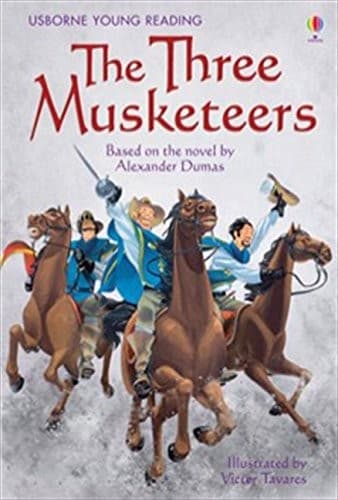
The Three Musketeers
(1844)A young Gascon named d'Artagnan rides into Paris on a yellow horse and promptly challenges three of the king's finest swordsmen to duels, only to become their closest friend by sundown. The four companions plunge into court intrigue, secret missions, and swordfights across 17th century France. It is pure, joyful adventure storytelling at its most infectious.
Dumas essentially invented the buddy action genre with this novel, giving us the immortal motto 'All for one, and one for all.' Each musketeer has a distinct personality that plays off the others, creating a group dynamic that every ensemble story since has tried to replicate. The villain Milady de Winter is one of fiction's great antagonists, brilliant and ruthless in ways that make her scenes genuinely tense. Dumas wrote with such infectious energy that his prose still feels fast and modern despite being nearly two centuries old. The novel also provides a surprisingly detailed and entertaining window into the political machinations of Cardinal Richelieu's France.
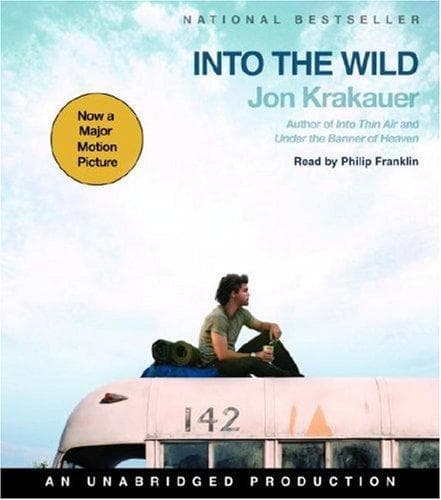
Into the Wild
(1996)Chris McCandless gave away his savings, abandoned his car, and hitchhiked to the Alaskan wilderness to live completely alone. Jon Krakauer traces McCandless's journey across the American West, talking to the people he met along the way. It is a gripping true story that will make you argue with yourself about whether McCandless was brave, foolish, or both.
Krakauer does something rare in nonfiction by refusing to pass easy judgment on his subject. He clearly admires McCandless's idealism while honestly documenting the mistakes that led to his death, and this tension drives the book. Krakauer also weaves in his own youthful mountaineering recklessness, creating a parallel that adds emotional honesty to the reporting. The book captures something real about the restlessness that many young people feel, the urge to strip life down to its essentials and test yourself against the raw world. It has become a rite of passage book for a reason, and the debates it sparks about privilege, preparation, and the romanticization of nature remain genuinely unresolved.
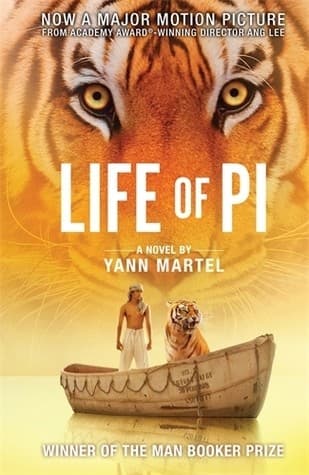
Life of Pi
(2001)Pi Patel, a zookeeper's son from Pondicherry, survives a shipwreck only to find himself sharing a lifeboat with a 450 pound Bengal tiger named Richard Parker. What follows is a hallucinatory, beautiful, and sometimes terrifying account of 227 days adrift on the Pacific Ocean. The ending will change the way you think about every story you have ever been told.
Yann Martel structures the entire novel around a single devastating question that he saves for the final pages, and it retroactively reshapes everything the reader has experienced. The survival sequences are viscerally convincing, drawing on real accounts of shipwreck survivors and animal behavior to create scenes that feel almost documentary. Martel also threads in Pi's simultaneous devotion to Hinduism, Christianity, and Islam, treating faith not as a punchline but as a genuine human need for narrative and meaning. The tiger Richard Parker is one of the great animal characters in literature, never anthropomorphized yet somehow deeply compelling. The novel won the Booker Prize and earned it, offering an adventure story that also functions as a philosophical puzzle about the nature of truth.
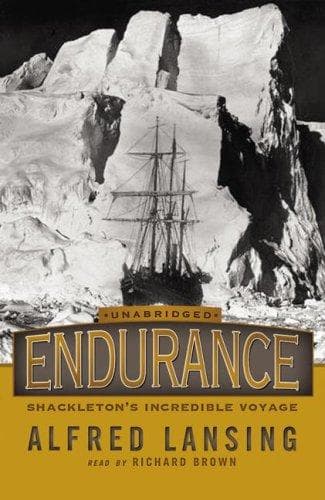
In 1914, Ernest Shackleton's ship was crushed by Antarctic ice, leaving 27 men stranded on frozen floes with no radio, no rescue, and no hope of being found. What followed was a two year ordeal of starvation, frostbite, and an 800 mile open boat journey across the most dangerous ocean on Earth. Every member of the crew survived, and the story of how is almost impossible to believe.
Alfred Lansing spent years interviewing the surviving crew members and studying their diaries, and the result reads like the most gripping thriller ever written, except every word is true. The level of specific, physical detail is extraordinary, from the sound of ice crushing the ship's hull to the taste of seal blubber eaten raw. Shackleton emerges as a remarkable study in leadership, someone who managed morale as carefully as he managed supplies, and his decisions under pressure remain studied in business schools today. Lansing never sentimentalizes the suffering, which makes the crew's endurance feel genuinely heroic rather than melodramatic. The book stands as proof that real human beings are capable of far more than we imagine.
The Hunger Games
(2008)Katniss Everdeen volunteers to take her younger sister's place in a televised death match where 24 teenagers fight until only one remains. The Capitol treats the slaughter as entertainment, and Katniss must decide how much of herself she is willing to sacrifice to survive. Collins writes action sequences with a filmmaker's eye and never lets the pace drop for a second.
Suzanne Collins drew on the myth of Theseus and the Minotaur, reality television, and the Iraq War to create a dystopia that felt uncomfortably close to our own world. Katniss is a genuinely original heroine, not chosen by prophecy or gifted with special powers, simply a provider who is very good at staying alive. The trilogy's examination of how media manipulates war and suffering has only grown more relevant in the age of social media and 24 hour news cycles. Collins also refuses to glamorize violence, showing the lasting psychological damage that combat inflicts on her characters. The series sold over 100 million copies and fundamentally reshaped the young adult genre, proving that teenagers wanted stories with real stakes and moral complexity.
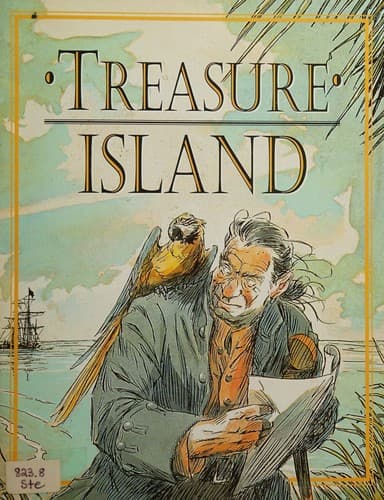
Treasure Island
(1883)Young Jim Hawkins finds a dead pirate's treasure map in his mother's seaside inn and sets sail on the Hispaniola to find the buried gold. The crew is packed with secret mutineers led by the charming, terrifying, one legged Long John Silver. It is the original pirate adventure, and every sea story since has sailed in its wake.
Robert Louis Stevenson wrote this for his stepson on a rainy vacation and essentially invented every pirate trope that still exists: treasure maps marked with an X, the black spot, parrots on shoulders, buried chests of gold. Long John Silver is one of the most fascinating characters in English literature, a villain who is so likable and so smart that the reader, like Jim, can never quite decide whether to trust him. Stevenson also made the brilliant choice of telling the story through a boy's eyes, which gives the violence and treachery an immediacy that an adult narrator could never match. The novel moves at a pace that modern thrillers envy, packing mutiny, murder, and moral complexity into under 300 pages. It proved that adventure fiction could also be great literature.
The Lord of the Rings
(1954)Frodo Baggins inherits a ring of terrifying power and must carry it across the whole of Middle earth to destroy it in the volcanic fires of Mount Doom. Along the way, kingdoms fall, friendships are tested, and ordinary hobbits prove braver than kings. This is the book that built modern fantasy, and reading it for the first time is an experience nothing else can replicate.
Tolkien spent over a decade writing this trilogy, drawing on his expertise as a philologist and his experience in the trenches of World War I to create a world of staggering depth and emotional truth. Middle earth has its own languages, histories, and mythologies that extend far beyond what appears on the page, giving the story a sense of reality that no other fantasy world has matched. The central theme, that power corrupts, and that the humble and overlooked may be better suited to resist it than the mighty, remains deeply resonant. Tolkien's prose shifts from homely comfort in the Shire to genuine grandeur in Gondor and Rohan, matching the style to the emotional register of each scene. Every epic fantasy published since, from Game of Thrones to The Wheel of Time, exists in the space Tolkien opened up.
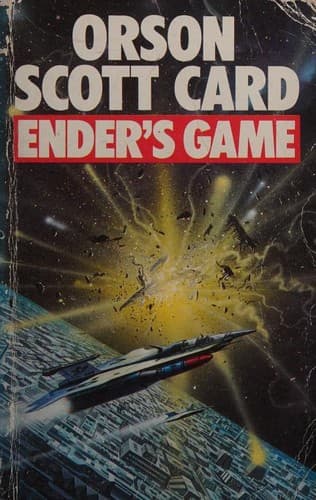
Ender's Game
(1985)Six year old Andrew 'Ender' Wiggin is recruited to an orbiting military academy because Earth's leaders believe only a child genius can defeat an alien threat. The Battle Room scenes, where children fight in zero gravity war games, are some of the most inventive and thrilling sequences in science fiction. The ending delivers a moral gut punch that will stay with you for years.
Orson Scott Card won both the Hugo and the Nebula Award for this novel, one of only a handful of books ever to sweep both prizes. The Battle Room sequences are masterfully designed, functioning as both gripping action scenes and a study of how Ender's mind works under pressure. Card asks a genuinely difficult question about whether the end justifies the means, and the novel's final revelation forces readers to reconsider everything they have been cheering for. The portrayal of childhood isolation and the weight of adult expectations placed on young shoulders resonates powerfully with teenage readers. Ender's loneliness, his brilliance, and his moral anguish create a character who feels real even in the most fantastical circumstances.
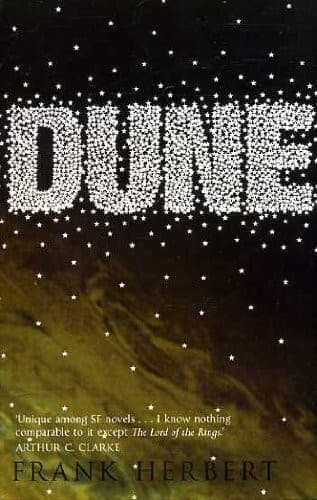
Dune
(1965)Fifteen year old Paul Atreides arrives on the desert planet Arrakis, the only source of the most valuable substance in the universe, and is immediately plunged into a war of politics, religion, and survival. The sandworms are terrifying, the desert culture is richly imagined, and the scope of the story is breathtaking. Reading Dune is like stepping into a fully realized civilization that feels as detailed and ancient as our own.
Frank Herbert spent six years researching this novel, studying desert ecology, Middle Eastern history, and psychedelic mushroom cultures, and the result is the most densely layered science fiction world ever built. Every element of Arrakeen society, from the Fremen stillsuits that recycle body moisture to the political economy of spice, is worked out with scientific rigor. Herbert also created a deliberate critique of messianic leadership, showing how Paul's rise to power becomes a trap that threatens to consume him and his people. The novel's ecological themes were decades ahead of their time, portraying a planet where water scarcity drives every aspect of culture and politics. Dune has sold over 20 million copies and directly influenced everything from Star Wars to modern climate fiction.
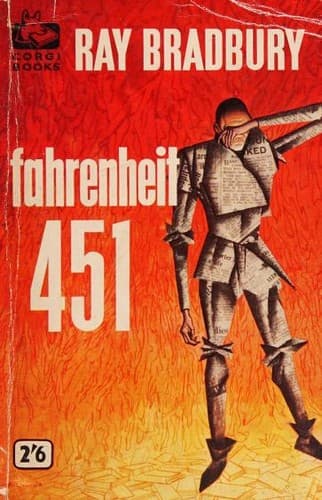
Fahrenheit 451
(1953)Guy Montag is a fireman, which in his world means he burns books for a living. When a strange young neighbor asks him if he is happy, he realizes he has no idea, and begins to question everything his society has told him. Bradbury's prose blazes with the same fire Montag uses, making this one of the most urgent and readable dystopias ever written.
Bradbury wrote this novel during the McCarthy era, when book banning and political conformity were real threats, and his anger fuels every page. What makes the novel especially prescient is that the censorship in Fahrenheit 451 does not come from a tyrannical government alone; it grows from a population that preferred entertainment to thinking, choosing screens over substance. The Mechanical Hound, a robotic hunter that tracks dissidents, predicted surveillance technology with eerie accuracy. Bradbury's prose style is almost poetic, using metaphor and rhythm in ways that make even short passages feel electric. The novel also gave us one of science fiction's most memorable images: people who become living books, each memorizing an entire text to preserve it from destruction.
Young Ged, a goatherd's son with raw magical talent, enters a school for wizards and rashly unleashes a shadow creature that hunts him across the archipelago world of Earthsea. Le Guin's prose is spare and luminous, carrying the weight of myth in every carefully chosen sentence. This is fantasy that reads like poetry and stays with you like a dream.
Ursula K. Le Guin wrote A Wizard of Earthsea partly as a response to the whiteness of fantasy fiction, setting her story in a world where most characters are brown or black skinned. The magic system is built on the idea that knowing the true name of a thing gives you power over it, which turns language itself into the source of magic. Le Guin's central theme, that Ged must face and accept his own shadow rather than flee from it, draws on Jungian psychology and Taoist philosophy in ways that feel organic rather than preachy. Her prose is famously disciplined, achieving in 200 pages what many fantasy authors fail to accomplish in a thousand. The Earthsea books influenced generations of writers, and their insistence that wisdom matters more than power remains quietly revolutionary in a genre often obsessed with spectacle.
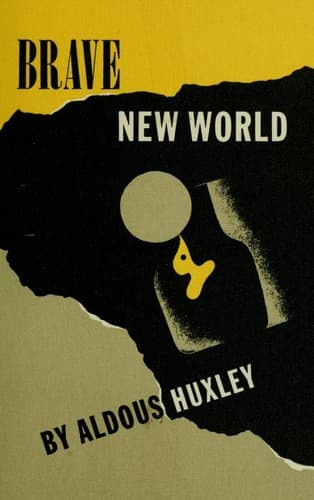
Brave New World
(1932)In the World State, humans are grown in bottles, sorted into castes, and kept docile with recreational drugs and engineered pleasures. Nobody suffers, nobody questions, and nobody reads Shakespeare. When a man raised outside this system arrives, his encounter with engineered happiness becomes a collision between freedom and comfort that neither side survives.
Aldous Huxley predicted genetic engineering, antidepressant culture, and the numbing effects of endless entertainment nearly a century before they became realities. While Orwell imagined tyranny through pain, Huxley imagined something arguably more unsettling: tyranny through pleasure, a world where people surrender freedom voluntarily because they are too comfortable to care. The novel's Bokanovsky Process, where a single embryo is split into dozens of identical workers, anticipated cloning decades before Dolly the sheep. Huxley was also remarkably prescient about consumer culture, depicting a society where citizens are conditioned from birth to consume and discard. The debate between Huxley's vision and Orwell's has become a perennial question: which dystopia did we actually end up living in?
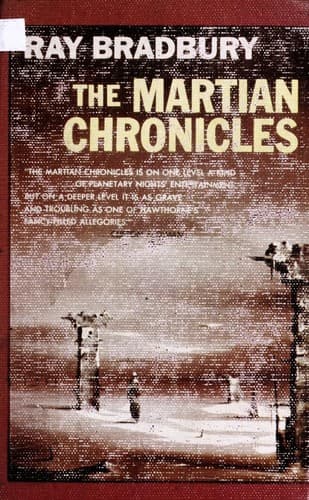
The Martian Chronicles
(1950)Humans arrive on Mars in waves, and each expedition reveals something new about the planet's dying civilization and about humanity's own worst impulses. Bradbury writes about colonization, loneliness, and memory with a poet's sensitivity, making each short chapter feel like a self contained gem. This is science fiction that cares more about the human heart than about rocket engines.
Bradbury was not interested in technical accuracy; he wanted to use Mars as a mirror for American anxieties about nuclear war, racism, and the destruction of indigenous cultures. Each story in the collection works as a standalone piece, yet together they form a coherent narrative arc that traces humanity's expansion, destruction, and possible redemption. 'There Will Come Soft Rains,' about an automated house continuing its routines after a nuclear war has killed its family, remains one of the most devastating pieces of short fiction ever written. Bradbury's prose has a lyrical, dreamlike quality that sets him apart from nearly every other science fiction writer of his era. The Chronicles also served as a pointed critique of American colonialism, drawing explicit parallels between the treatment of Martians and the treatment of Native Americans.
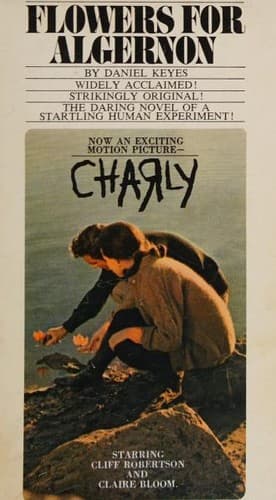
Flowers for Algernon
(1966)Charlie Gordon, a man with an intellectual disability, undergoes an experimental surgery that triples his IQ, allowing him to experience the world with a genius mind for the first time. His progress reports, written in his own voice, chart his transformation from simple kindness through dazzling brilliance and back again. It is one of the most emotionally devastating reading experiences in all of fiction.
Daniel Keyes made a structural choice of genius by telling the entire story through Charlie's first person progress reports, so the reader literally watches his spelling, grammar, and complexity of thought improve and then deteriorate on the page. This technique makes the emotional impact inescapable; you are not observing Charlie's tragedy from the outside, you are inside it. The novel raises profound questions about intelligence, dignity, and whether knowledge is worth having if it brings awareness of how cruelly the world treats those who are different. Algernon, the lab mouse who received the treatment before Charlie, serves as both a companion and a devastating foreshadowing device. The book won the Nebula Award and has remained continuously in print for nearly sixty years because its central questions about what makes someone truly human never grow old.
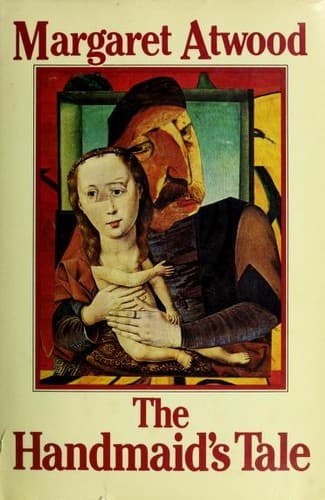
The Handmaid's Tale
(1985)In the Republic of Gilead, a theocratic regime has replaced the United States, and fertile women are forced into reproductive slavery as 'Handmaids' to powerful men. Offred narrates her daily life of surveillance, ritual, and quiet resistance, remembering the freedoms she once took for granted. Atwood's prose is controlled and precise, building dread through accumulation of small, suffocating details.
Margaret Atwood famously insisted that everything in the novel had a historical precedent, from forced surrogacy to the erasure of women's financial independence, and she drew on real events from across centuries and cultures. The genius of the novel is in its structure: Offred's fragmented, present tense narration forces the reader to piece together how democracy collapsed, revealing the process gradually and chillingly. Atwood captures the way authoritarian regimes rely not just on violence but on complicity, showing how ordinary people adapt to monstrous systems in order to survive. The 'Historical Notes' epilogue, set centuries in the future, adds a devastating layer of irony by showing academics treating Offred's suffering as an intellectual curiosity. The novel's imagery, particularly the red cloaks and white wings, has become one of the most recognized symbols of political protest worldwide.

And Then There Were None
(1939)Ten strangers are invited to a remote island under various pretexts, and one by one they begin to die, each death matching a line from the nursery rhyme framed in their bedrooms. With no way off the island and no idea who among them is the killer, paranoia and suspicion shatter every alliance. It is the most fiendishly plotted mystery novel ever written, and solving it before the final page is nearly impossible.
Agatha Christie's masterpiece has sold over 100 million copies, making it the bestselling mystery novel of all time and one of the bestselling books in any genre. The 'closed circle' structure, where suspects are trapped together and eliminated one by one, became the template for countless mystery stories, films, and television shows. Christie's plotting is so precise that every detail, from seating arrangements to a missing curtain hook, matters to the solution. The novel also functions as a study in guilt and justice, since each victim was invited to the island for a specific moral reason. Rereading the book after knowing the solution reveals just how fairly Christie played, planting clues in plain sight that nearly every reader misses on the first pass.
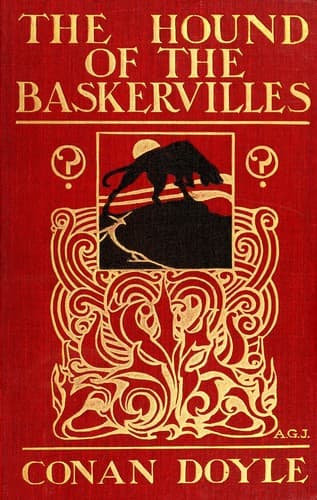
A family curse, a spectral hound with blazing eyes, and the fog shrouded moors of Dartmoor set the stage for Sherlock Holmes's most atmospheric case. When Sir Charles Baskerville dies of apparent fright, Holmes sends Watson to guard the new heir and investigate whether the legend of a demonic hound is superstition or murder. The tension between rational deduction and Gothic horror makes this Holmes at his most compelling.
Arthur Conan Doyle wrote this novel after killing off Holmes and being pressured by readers and his publisher to bring him back, and the creative freedom of a standalone adventure liberated his storytelling. The Dartmoor setting is a character in itself, with Doyle using the mist, the bogs, and the prehistoric stone huts to create an atmosphere of dread that rivals anything in Gothic fiction. Watson carries much of the narrative alone, giving him a depth and competence he rarely shows in the short stories. The mystery itself is elegantly constructed, with the supernatural elements gradually yielding to Holmes's rational explanations in a way that satisfies without deflating the tension. The novel remains the most popular Holmes story ever written and the most frequently adapted.
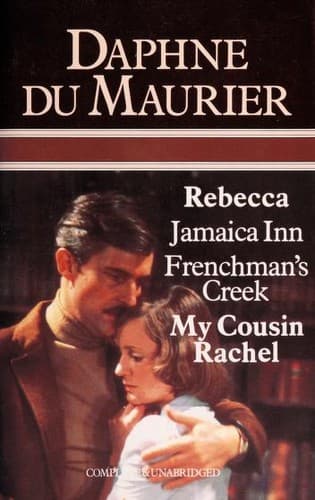
Rebecca
(1938)A young, unnamed narrator marries the wealthy Maxim de Winter and moves into his grand estate, Manderley, only to discover that the memory of his first wife Rebecca dominates every room, every servant, and every conversation. The sinister housekeeper Mrs. Danvers keeps Rebecca's presence alive with chilling devotion. Du Maurier builds suspense through social anxiety and psychological manipulation rather than violence, making every awkward dinner and whispered comparison feel like a threat.
Daphne du Maurier achieved something remarkable by making a dead woman the most vivid and powerful character in the novel, despite the fact that Rebecca never appears on the page. The unnamed narrator's insecurity and self doubt are rendered with such precision that readers physically cringe at her social missteps, creating a form of psychological suspense that is uniquely uncomfortable. Mrs. Danvers is one of fiction's great villains, operating through emotional manipulation rather than overt violence, and her scenes with the narrator are genuinely menacing. The novel also works as a sharp critique of class and gender expectations in 1930s England, showing how wealth and status can imprison rather than liberate. Its famous opening line, 'Last night I dreamt I went to Manderley again,' is one of the most recognized sentences in English literature.
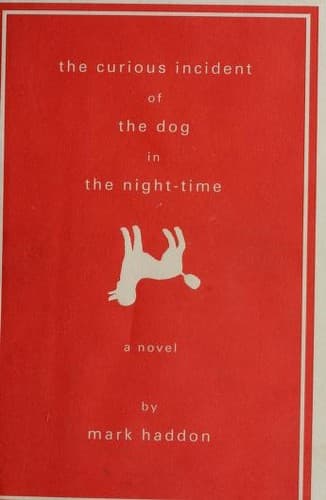
Christopher John Francis Boone, a fifteen year old who is exceptionally gifted at mathematics and struggles with social interaction, discovers a dead poodle on his neighbor's lawn and decides to investigate. His search for the dog's killer leads him to uncover secrets much closer to home, including truths his father has hidden from him. Haddon writes from inside Christopher's perspective with such skill that the reader sees the world through entirely new eyes.
Mark Haddon never names Christopher's condition in the text, a deliberate choice that keeps the focus on how Christopher experiences the world rather than on a clinical label. The novel uses diagrams, maps, mathematical proofs, and unconventional chapter numbering (only prime numbers) to bring Christopher's thought processes to life on the page. What begins as a quirky detective story gradually transforms into a deeply moving story about family, trust, and the courage it takes to navigate a world that was not designed for you. Haddon, who had worked with autistic individuals earlier in his career, wrote a protagonist who is neither pitiable nor inspirational but simply a person trying to make sense of things. The novel won the Whitbread Book of the Year and was adapted into a phenomenally successful stage play that won seven Olivier Awards.
In the Woods
(2007)Detective Rob Ryan investigates the murder of a twelve year old girl found on an archaeological site in the same Dublin woods where, twenty years earlier, his two best friends vanished and he was found clinging to a tree with no memory of what happened. As the present case deepens, his suppressed past threatens to surface and destroy both the investigation and his sanity. Tana French writes with the psychological depth of a literary novelist and the pacing of a master thriller writer.
French made a bold structural choice by interweaving two mysteries and then refusing to resolve one of them, a decision that frustrated some readers and electrified others, generating debates that continue years later. Her portrayal of the partnership between Rob and his fellow detective Cassie Maddox is one of the most nuanced and convincing depictions of platonic intimacy in modern fiction. The Dublin setting is rendered with atmospheric precision, from the suburban housing estates to the ancient woods, grounding the mystery in a very specific time and place. French is also exceptional at depicting the way trauma distorts memory and identity, making unreliable narration feel psychologically truthful rather than like a cheap trick. The novel launched the Dublin Murder Squad series, each book following a different detective from the previous case, creating one of the most acclaimed mystery series of the 21st century.
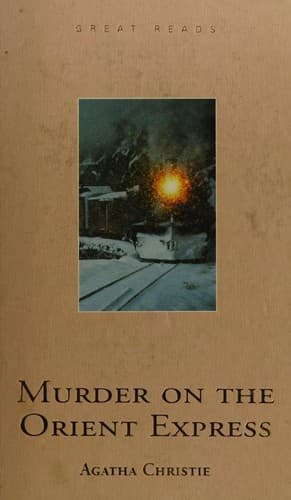
When a wealthy American is stabbed to death aboard the luxurious Orient Express, the train is stopped by a snowdrift, trapping detective Hercule Poirot with a carriage full of suspects. Every passenger has an alibi, every clue contradicts another, and the solution, when it comes, is unlike anything in detective fiction before or since. Christie's most famous novel is a masterclass in misdirection.
Christie built this novel around a single audacious twist that, once revealed, redefines the very concept of what a detective story can do. The plotting is a marvel of construction; every alibi, every timeline, every seemingly irrelevant detail clicks into place with mechanical precision. Poirot himself is at his most charismatic here, deploying his 'little grey cells' with theatrical flair while also confronting a genuine moral dilemma about the nature of justice. The Orient Express setting, with its luxury compartments and international passengers, creates a glamorous and claustrophobic atmosphere that has been imitated countless times. The novel has been adapted into multiple films, a television special, and countless parodies, yet the original twist still has the power to shock first time readers.
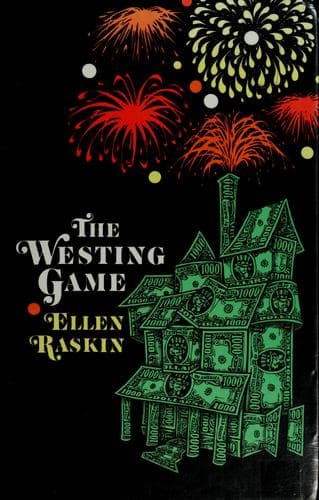
The Westing Game
(1978)When eccentric millionaire Sam Westing dies, sixteen unlikely heirs are paired up and given cryptic clues to compete for his 200 million dollar fortune. The heirs include a teenager, a dressmaker, a judge, and a bookie, and each pairing seems deliberately designed to force unlikely people together. Ellen Raskin's puzzle box of a novel rewards careful readers who pay attention to every name, every clue, and every seemingly throwaway detail.
Raskin constructed one of the most intricate and satisfying puzzle plots in all of fiction, a mystery where the clues are hidden in names, positions, physical descriptions, and even the apartment numbers of the characters. The novel won the Newbery Medal and has remained continuously in print for nearly fifty years because each rereading reveals new layers that were invisible the first time through. Raskin populates her cast with characters from diverse backgrounds, including Asian American, Black, and disabled characters, which was unusual and progressive for children's fiction in 1978. The solution requires the reader to question assumptions about identity itself, making the mystery both intellectually satisfying and thematically rich. It is one of those rare books that is genuinely better the second time, when you can see how every piece was placed with intention.
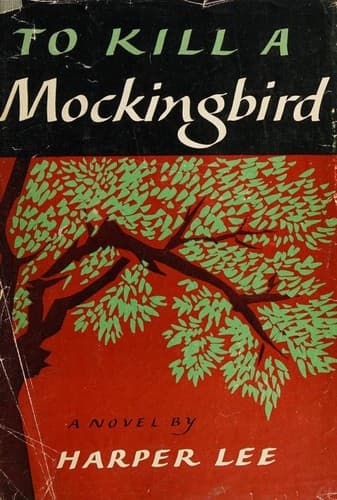
To Kill a Mockingbird
(1960)Scout Finch is six years old when her father, the lawyer Atticus Finch, agrees to defend Tom Robinson, a Black man falsely accused of assaulting a white woman in 1930s Alabama. Through Scout's eyes, the reader watches a small town reveal its deepest prejudices and its fragile capacity for decency. Lee's writing is warm, funny, and ultimately devastating in its portrait of injustice.
Harper Lee won the Pulitzer Prize for this, her only published novel for over fifty years, and it has been assigned in more American classrooms than any other work of fiction. Atticus Finch became the moral ideal of an entire profession; surveys consistently show he is the most cited reason people say they went to law school. Lee's achievement was in making the story accessible through a child's perspective, allowing Scout's innocence to highlight the absurdity and cruelty of racial prejudice without resorting to didacticism. The novel also captures the texture of small town Southern life with extraordinary precision, from the summer rhythms of Maycomb to the terrifying figure of Boo Radley. Its limitations, including its centering of white characters in a story about racial injustice, have become the subject of important contemporary criticism, which makes reading it today an even richer experience.
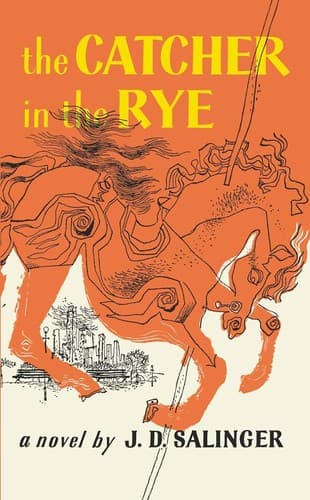
The Catcher in the Rye
(1951)Holden Caulfield has just been expelled from his fourth prep school, and instead of going home he spends three days wandering New York City, ranting about phonies, visiting old teachers, and trying to figure out where the ducks in Central Park go in winter. Salinger's prose captures the voice of a restless, grieving teenager so perfectly that every generation since has claimed Holden as their own. It is the rare novel that makes you feel simultaneously annoyed by and deeply protective of its narrator.
Salinger captured adolescent alienation with such precision that the novel became a cultural touchstone the moment it was published and has never gone out of print. Holden's voice, with its repetitions, contradictions, and casual profanity, was revolutionary in 1951 and still feels startlingly authentic. Beneath the surface cynicism, the novel is about grief; Holden's dead younger brother Allie haunts every page, and his famous fantasy about catching children before they fall off a cliff is really about wanting to protect innocence from the losses he has already suffered. Salinger also renders mid century New York City with documentary precision, from the Edmont Hotel to the Museum of Natural History, creating a portrait of a city that readers can still walk through. The novel's divisiveness is part of its legacy: readers either see themselves in Holden or find him insufferable, and both reactions tell you something.
Pride and Prejudice
(1813)Elizabeth Bennet is smart, sharp tongued, and determined not to marry for anything less than love, which puts her on a collision course with the wealthy and seemingly arrogant Mr. Darcy. Austen turns the drawing rooms and country dances of Regency England into a battlefield of wit, pride, and misunderstanding. The romance between Elizabeth and Darcy has been retold in hundreds of adaptations, yet the original remains funnier and more satisfying than any of them.
Jane Austen published this novel anonymously, credited only to 'A Lady,' yet it became one of the most influential works in the English language. Her genius lay in treating the domestic sphere with the same seriousness and complexity that other writers reserved for war and politics, revealing the power dynamics, economic pressures, and social calculations that governed women's lives. Elizabeth Bennet is one of literature's most enduring heroines because she is genuinely witty rather than merely described as such; Austen gives her dialogue that still makes readers laugh out loud two centuries later. The novel also works as sharp social satire, skewering the absurdities of class consciousness through characters like the obsequious Mr. Collins and the imperious Lady Catherine de Bourgh. Austen's controlled, ironic prose style has influenced virtually every comic novelist who followed, from Dickens to Nora Ephron.
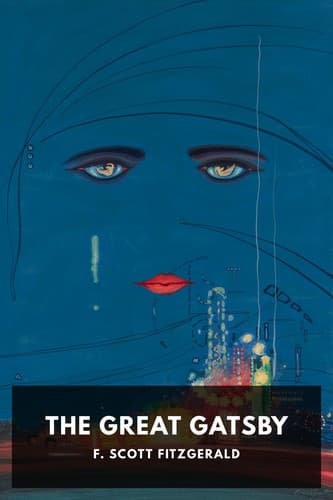
The Great Gatsby
(1925)Nick Carraway moves to Long Island and becomes neighbors with the mysterious Jay Gatsby, whose lavish parties and obsessive longing for the married Daisy Buchanan mask a secret past and an impossible dream. Fitzgerald writes about wealth, desire, and self invention with sentences so precise they feel carved. It is a slim novel that contains an entire era.
Fitzgerald captured the promise and hollowness of the American Dream in fewer than 50,000 words, creating a novel that has only grown in stature since his death. His prose style is extraordinary: nearly every sentence in the book has been quoted, studied, and imitated, from the green light at the end of Daisy's dock to the eyes of Doctor T.J. Eckleburg watching over the valley of ashes. Gatsby himself is one of fiction's great tragic figures, a man who reinvents himself completely only to discover that the past he is chasing never existed in the form he remembers. Nick Carraway's narration is deceptively simple, and careful readers notice that he is far less reliable and far more complicit than he presents himself. The novel was a commercial failure when first published and only became recognized as a masterpiece after Fitzgerald's death, when Armed Services Editions distributed 155,000 free copies to soldiers during World War II.
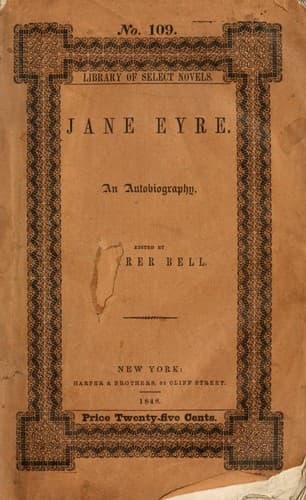
Jane Eyre
(1847)Orphaned, abused, and sent to a harsh charity school, Jane Eyre grows into a woman of fierce independence who takes a position as governess at the brooding Thornfield Hall, where she falls in love with her employer, Mr. Rochester, only to discover a terrible secret hidden in the attic. Charlotte Bronte writes with a raw emotional intensity that makes you feel Jane's loneliness, her passion, and her iron determination to be treated as an equal. This is one of the great love stories in English, and it belongs entirely to its heroine.
Bronte published under the male pseudonym Currer Bell in 1847, and critics who praised the novel's 'masculine vigor' were shocked to learn a woman had written it. Jane's declaration to Rochester, 'I am no bird; and no net ensnares me,' was a radical assertion of female autonomy for its era and remains powerful today. The novel essentially invented the modern romance narrative structure: two strong willed people drawn together, separated by secrets and moral obstacles, and ultimately reunited on equal terms. Bronte also wove in Gothic elements, from the mysterious laughter in the attic to the fire that transforms Thornfield, creating atmosphere that ranges from psychological realism to genuine horror. The character of Bertha Mason, Rochester's hidden first wife, has generated over a century of literary analysis and inspired Jean Rhys's brilliant postcolonial response novel, Wide Sargasso Sea.
1984
(1949)Winston Smith lives in a society where the government rewrites history daily, cameras watch every move, and even thinking the wrong thought is a crime punishable by torture and death. When he begins a forbidden love affair and seeks out a rumored resistance movement, every step toward freedom tightens the trap around him. Orwell writes with terrifying clarity about how totalitarianism destroys not just freedom but the very concept of truth.
Orwell's final novel gave the English language an entire vocabulary for describing authoritarianism: Big Brother, doublethink, thoughtcrime, newspeak, Room 101, and the memory hole have all entered common usage. The novel was written as Orwell was dying of tuberculosis, and there is a desperate urgency to the prose that makes it feel less like fiction and more like a warning shouted across time. Orwell's most chilling insight is that the Party does not merely demand obedience; it demands that citizens genuinely believe contradictory things, that two plus two equals five, because controlling thought is the ultimate form of power. The love story between Winston and Julia is both tender and devastating, showing how even the most private human connection becomes a weapon in the hands of the state. The novel's final four words are among the most discussed and debated endings in all of literature.
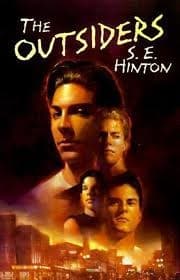
The Outsiders
(1967)Ponyboy Curtis is a Greaser, one of the poor, long haired kids from the wrong side of town, and his world revolves around loyalty to his gang and survival against the wealthy Socs who terrorize them. When a fight goes fatally wrong, Ponyboy and his friend Johnny go on the run, and the stakes escalate from schoolyard rivalry to life and death. Hinton writes about class, brotherhood, and growing up with an emotional directness that hits like a punch.
S.E. Hinton was sixteen years old when she wrote The Outsiders, frustrated by the sanitized teenage fiction available in the 1960s, and her youth gives the novel an authenticity that no adult author could have faked. The book essentially invented the young adult genre as we know it, proving that teenagers wanted to read about real problems, real violence, and real emotional stakes. Ponyboy's voice is distinctive and immediate, capturing the way teenagers actually think and talk without condescension or adult filtering. The novel's exploration of class division remains relevant; the Greaser and Soc conflict maps onto economic divides that have only deepened since 1967. The line 'Stay gold, Ponyboy,' drawn from Robert Frost's poem 'Nothing Gold Can Stay,' has become one of the most recognized phrases in young adult literature.
Dracula
(1897)Jonathan Harker travels to Transylvania on a real estate transaction and realizes too late that his host, Count Dracula, is an ancient predator with plans to bring his hunger to England. Told through diary entries, letters, and newspaper clippings, the novel builds dread through the accumulation of small horrors before erupting into a full scale hunt across Europe. Stoker invented the modern vampire, and reading the original after a lifetime of imitations is a revelation.
Bram Stoker assembled the novel from fragments of existing vampire folklore, blending Eastern European legends with Victorian anxieties about sexuality, immigration, and disease to create a monster that has never stopped being relevant. The epistolary format, told through multiple narrators' diaries and correspondence, was innovative and creates a sense of documentary realism that makes the supernatural elements more convincing. Dracula himself appears surprisingly little in the novel, which makes his presence feel more menacing; he operates through atmosphere and implication rather than constant spectacle. The novel also features one of fiction's great ensemble casts, from the doomed Lucy Westenra to the eccentric Professor Van Helsing to the madman Renfield, each contributing a different perspective on the Count's influence. Every vampire in modern fiction and film, from Nosferatu to Twilight to Interview with the Vampire, descends directly from Stoker's creation.
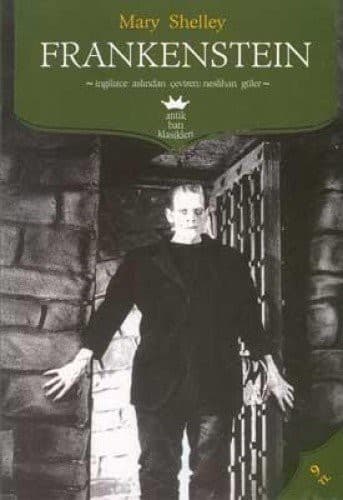
Frankenstein
(1818)Victor Frankenstein, a brilliant young scientist consumed by ambition, assembles a living creature from dead tissue and then abandons it in horror at what he has made. The creature, intelligent and articulate, seeks companionship and finds only rejection, and his despair curdles into a rage that will destroy everything Victor loves. Mary Shelley wrote a horror novel that is really a tragedy, and the question of who is the true monster has haunted readers for over two centuries.
Mary Shelley was just eighteen years old when she wrote this novel during a ghost story competition at Lord Byron's villa on Lake Geneva, and in doing so she created both science fiction and one of the most enduring myths of the modern world. The novel's structure, a story within a story within a story, was daring for its time and mirrors the way each narrator sees events differently. Shelley's most radical move was giving the creature a voice: his narration in the middle section of the novel, eloquent and agonized, forces readers to confront the ethical responsibilities of creation and the consequences of abandonment. The novel engages with questions about scientific ethics that were purely theoretical in 1818 but have become urgent in the age of artificial intelligence, genetic engineering, and cloning. Shelley also drew on the Prometheus myth, Paradise Lost, and the debates of her parents (the philosopher William Godwin and the feminist Mary Wollstonecraft) to create a work that rewards analysis from almost any critical angle.
Lord of the Flies
(1954)A group of British schoolboys crash lands on an uninhabited island and, with no adults to guide them, attempts to build a society from scratch. What begins with democratic assemblies and signal fires descends, step by terrifying step, into painted faces, ritual hunting, and murder. Golding strips away civilization to reveal what lies underneath, and the answer is not reassuring.
William Golding wrote this novel as a deliberate response to the Victorian adventure story tradition, particularly R.M. Ballantyne's The Coral Island, which depicted shipwrecked boys creating a cheerful, orderly society. Golding, who had served in the Royal Navy during World War II and witnessed human cruelty firsthand, believed that picture was dangerously naive. The novel's power lies in the specificity of its psychological observations: each stage of the boys' descent feels plausible, driven by recognizable fears, rivalries, and the intoxication of power without consequence. The symbols Golding uses, the conch shell as democracy, the beast as projected fear, the Lord of the Flies itself as the evil within, are accessible enough for classroom analysis while remaining genuinely disturbing. The novel has been continuously in print since 1954 and is one of the most widely taught books in the English speaking world.
Dorian Gray is so beautiful that a painter captures his likeness in a masterpiece, and Dorian, terrified of losing his youth, makes a wish that the portrait will age instead of him. As Dorian plunges into decades of cruelty and excess, his face remains perfect while the hidden painting becomes a rotting record of every sin. Wilde turns a Gothic premise into a dazzling philosophical novel about art, beauty, and moral corruption.
Oscar Wilde loaded this novel with some of the most quotable lines in English literature, from 'The only way to get rid of a temptation is to yield to it' to 'Each man kills the thing he loves,' and his epigrammatic style makes every page crackle with intelligence. The novel operates simultaneously as a Gothic horror story, a philosophical dialogue about aesthetics, and a coded exploration of Wilde's own homosexuality, written in an era when such themes could only be expressed through subtext. Lord Henry Wotton, who seduces Dorian with ideas rather than actions, is one of fiction's great tempters, and his speeches about pleasure and beauty are so persuasive that readers find themselves nodding along before realizing they are being corrupted alongside Dorian. Wilde's only novel was used as evidence against him in his obscenity trial in 1895, making it literally a dangerous book. The central conceit, that the consequences of our actions cannot be hidden forever, has resonated with every generation since.
Of Mice and Men
(1937)George and Lennie are migrant workers in Depression era California, drifting from ranch to ranch with a shared dream of saving enough money to buy their own small farm. George is sharp and protective; Lennie is enormous, gentle, and intellectually disabled, with a dangerous inability to control his own strength. Steinbeck tells their story in barely a hundred pages, and the ending is one of the most emotionally shattering in American literature.
Steinbeck wrote this novel in a form he called a 'play novelette,' designing it so it could be performed on stage with almost no adaptation, and the tight structure gives the story a compressed power that a longer novel could not achieve. Every detail, from the dead mouse in Lennie's pocket to Candy's old dog, foreshadows the conclusion with a precision that becomes devastating on rereading. The novel is a study of loneliness and the way powerless people cling to dreams they know will never come true, and Steinbeck treats his characters with a compassion that never becomes sentimentality. The relationship between George and Lennie is one of literature's great portraits of friendship and caretaking, complicated by the fact that George's protectiveness cannot ultimately protect Lennie from himself. Steinbeck won the Nobel Prize in Literature in 1962, and this novella remains his most widely read and most frequently performed work.
The Stranger
(1942)Meursault, a French clerk living in Algeria, attends his mother's funeral without crying, begins a casual affair, and then, for no clear reason, shoots a man on a beach. His trial becomes less about the murder and more about his refusal to perform the emotions society expects of him. Camus writes with a sun bleached clarity that makes even the most disturbing events feel strangely calm.
Albert Camus used Meursault's radical honesty as a lens for examining existentialism, the philosophical idea that life has no inherent meaning and that human beings must create their own purpose. The novel's prose style, translated from French with short, declarative sentences and an almost affectless tone, mirrors Meursault's detachment from social conventions. What makes the novel genuinely unsettling is that Meursault is not a villain or a madman; he simply refuses to lie about his feelings, and society punishes him for that refusal more than for the actual crime. Camus, who was born in French Algeria, also embedded a critique of colonialism in the novel that becomes more visible with each rereading: the Arab victim is never named, and the entire justice system treats his death as secondary to Meursault's emotional failures. Camus won the Nobel Prize in Literature in 1957 at age 44, making him the second youngest laureate in the prize's history.
Animal Farm
(1945)The animals of Manor Farm overthrow their drunken owner and establish a society based on equality, only to watch in helpless confusion as the pigs gradually take over and become indistinguishable from the humans they replaced. Orwell tells this story with the simplicity of a children's fable, which makes its political ruthlessness hit even harder. You will finish it in an afternoon, and the last page will follow you for years.
Orwell wrote this as a direct allegory of the Russian Revolution and Stalin's betrayal of socialist ideals, mapping each character onto a historical figure: Napoleon is Stalin, Snowball is Trotsky, Boxer the horse is the exploited working class. The novel was rejected by multiple publishers during World War II because the Soviet Union was a British ally and criticizing Stalin was politically inconvenient; one rejection letter came from T.S. Eliot at Faber and Faber. Orwell's genius was in choosing the fable form, which makes the political message accessible to readers of any age while also giving it a timeless quality that transcends its specific historical moment. The commandment 'All animals are equal, but some animals are more equal than others' has become one of the most quoted lines in political literature. The novel works as a warning not just about Soviet communism but about any revolution that concentrates power in the hands of those who claim to serve the people.
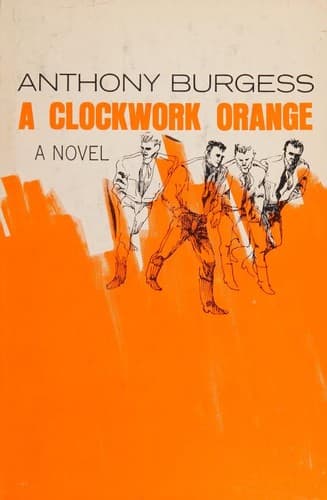
A Clockwork Orange
(1962)Alex, a fifteen year old delinquent who loves Beethoven and ultraviolence in equal measure, narrates his crimes and his subsequent 'rehabilitation' by a government that strips him of his ability to choose evil. Anthony Burgess invents an entire slang language called Nadsat for Alex to speak, and once you start understanding it, you realize you have been drawn into complicity with a monster. The novel asks whether it is better to be a person who chooses to do wrong or a machine programmed to do right.
Burgess created Nadsat by blending Russian, Cockney rhyming slang, and invented words, and this language serves a dual purpose: it distances the reader from the violence just enough to keep reading while also demonstrating how language itself can be used to manipulate perception. The novel's central philosophical question about free will versus state control resonated during the Cold War and continues to provoke debate in an era of behavioral psychology, pharmaceutical intervention, and algorithmic nudging. Stanley Kubrick's 1971 film adaptation overshadowed the novel for decades, partly because Kubrick used the American edition, which omitted Burgess's final chapter in which Alex begins to mature naturally. Burgess always insisted that this last chapter was essential, arguing that a story about human choice must allow for the possibility of genuine change. The novel functions simultaneously as a thriller, a satire of both youth culture and government overreach, and a serious philosophical treatise on the nature of morality.
The Old Man and the Sea
(1952)Santiago, an aging Cuban fisherman who has gone eighty four days without a catch, hooks a giant marlin far out in the Gulf Stream and fights it for three days, alone, with nothing but his hands, his will, and his memories. Hemingway strips storytelling down to its absolute essentials: one man, one fish, one ocean. The result is a meditation on endurance, pride, and what it means to be defeated without being destroyed.
Hemingway won both the Pulitzer Prize and the Nobel Prize in Literature largely on the strength of this novella, which restored his literary reputation after a decade of critical disappointment. His prose style here achieves a purity that borders on the biblical, using simple words and short sentences to convey enormous emotional depth. Santiago's internal monologues, his conversations with the fish, and his memories of lions on African beaches create a portrait of a man who is fully alive in every moment, even as his body fails him. The novella is also Hemingway's fullest expression of his philosophy of grace under pressure, the idea that a person's character is revealed not by whether they win or lose but by how they conduct themselves in the struggle. At barely a hundred pages, it proves that great literature does not require length, only precision.
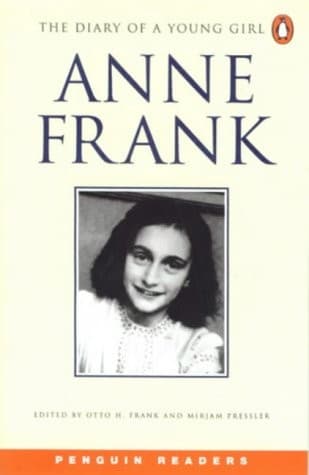
Anne Frank was thirteen when her Jewish family went into hiding in a concealed annex above her father's office in Nazi occupied Amsterdam. For two years she wrote in her diary about fear, boredom, family arguments, her first crush, and her dreams of becoming a writer. Her voice is so vivid and immediate that you forget you are reading history and feel instead like you are reading the private thoughts of a girl you know.
Anne Frank's diary is the most widely read personal document from the Holocaust, translated into over 70 languages, because it puts a singular human voice to an event of incomprehensible scale. What makes the diary extraordinary is not just its historical context but its literary quality; Anne revised her entries with a writer's eye, consciously shaping them into something she hoped would be published after the war. She writes about her mother with unflinching adolescent honesty, about Peter van Pels with the breathless uncertainty of first love, and about her own ambitions with a clarity that makes her death at Bergen Belsen feel like a personal loss rather than a statistic. Her father Otto, the only family member to survive, spent the rest of his life ensuring her words reached the world. The diary stands as both a historical document and a portrait of adolescence so specific and alive that it transcends its terrible context.
Maya Angelou's memoir begins in the rural town of Stamps, Arkansas, where she and her brother are raised by their grandmother after their parents' marriage falls apart. She writes about the Black church, the cotton fields, the casual brutality of segregation, and the transformative moment when a teacher introduced her to literature. Angelou's prose has the rhythm and power of spoken word, turning a childhood of hardship into a story of survival through language, dignity, and community.
Angelou's memoir broke ground in 1969 by speaking openly about experiences that Black women were rarely permitted to discuss in public: racism, sexual abuse, teenage pregnancy, and the complex shame and resilience those experiences produce. Her writing style blends the traditions of Southern storytelling, African American oral culture, and literary modernism into something entirely her own. The book's most devastating passage describes her assault at age eight and the silence that followed, rendered with a restraint that makes the horror more palpable, not less. Angelou went on to become one of the most celebrated voices in American letters, reading her poem 'On the Pulse of Morning' at President Clinton's inauguration. The memoir is the first of seven autobiographical volumes, but it stands alone as a complete and powerful work, and its influence on memoir as a genre cannot be overstated.
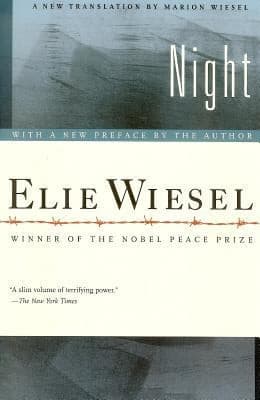
Night
(1960)Elie Wiesel was fifteen when he and his father were deported from their village in Romania to Auschwitz, and Night is his account of what they endured across two concentration camps during the final year of World War II. Written in sparse, haunted prose, the memoir documents the systematic destruction of everything Wiesel believed about God, humanity, and his own capacity to remain good. It is one of the shortest and most devastating books you will ever read.
Wiesel originally wrote a much longer Yiddish manuscript titled 'And the World Remained Silent,' which he compressed into the brief, controlled French text that became Night, and that compression gives every sentence the weight of testimony under oath. The memoir charts not just physical survival but the disintegration of Wiesel's faith, moving from a boy who studied the Talmud and wept during prayer to a man who watched hangings and felt nothing. The relationship between Elie and his father Shlomo anchors the narrative, and its slow erosion under the pressures of starvation and exhaustion is almost unbearable to read. Wiesel went on to win the Nobel Peace Prize in 1986, dedicating his life to ensuring the Holocaust would not be forgotten or denied. Night has sold over ten million copies and is considered essential reading for understanding the 20th century.
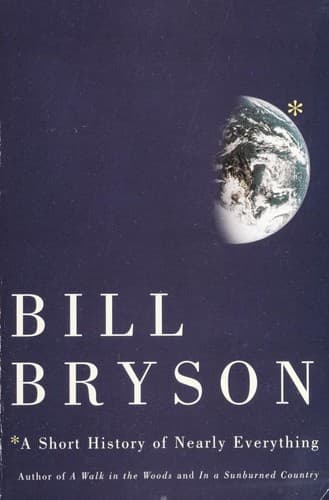
Bill Bryson set out to understand how we know what we know about the universe, from the Big Bang to the rise of civilization, and the result is the most entertaining science book ever written. He interviews scientists, visits laboratories, and explains everything from plate tectonics to quantum mechanics with humor, wonder, and a gift for making the incomprehensibly large and small feel personal. You will finish this book knowing more about how the world works and feeling astonished that it works at all.
Bryson's great achievement is making complex science not just accessible but genuinely thrilling, treating the history of scientific discovery as an adventure story full of eccentric geniuses, bitter rivalries, and astonishing coincidences. He explains the scale of atoms by calculating that a single glass of water contains enough molecules to fill a medium sized lake, and he conveys geological time by compressing Earth's history so that a human lifetime equals half a second. The book also does not shy away from the many times science got things spectacularly wrong, which paradoxically makes the eventual discoveries more impressive. Bryson's humor is essential to his method; by making readers laugh, he keeps them engaged through material that might otherwise feel like a textbook. The book has sold over three million copies and has been credited by countless readers as the book that made them fall in love with science.
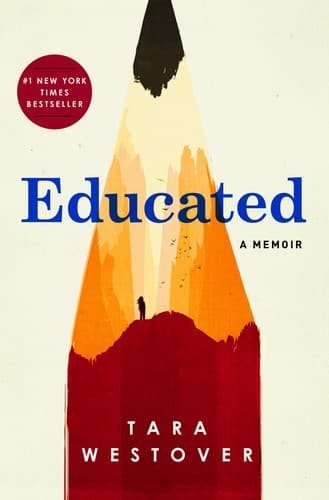
Educated
(2018)Tara Westover grew up in a survivalist family in rural Idaho, never attending school, working in her father's junkyard, and enduring injuries that went untreated because her parents distrusted hospitals. Through sheer will and the help of a few key people, she taught herself enough to pass the ACT, enter Brigham Young University, and eventually earn a PhD from Cambridge. Her memoir reads like a novel you cannot put down, except everything in it actually happened.
Westover's memoir is remarkable for the honesty with which she depicts her own complicity in her family's belief system, showing how deeply internalized ideology can be even when it is obviously destructive from the outside. She does not write about her family as villains; her father's paranoia is depicted with a complexity that allows readers to see how charisma, religious conviction, and mental illness can fuse into something both loving and dangerous. The book's structural achievement is in making the reader feel the protagonist's disorientation as education forces her to question everything she was raised to believe, a process that is exhilarating and painful in equal measure. Westover writes with the precision of a trained historian, and her account of the gap between her family's version of events and documented reality raises profound questions about memory and truth. The book spent over two years on the New York Times bestseller list and was named one of the best books of the decade by multiple publications.
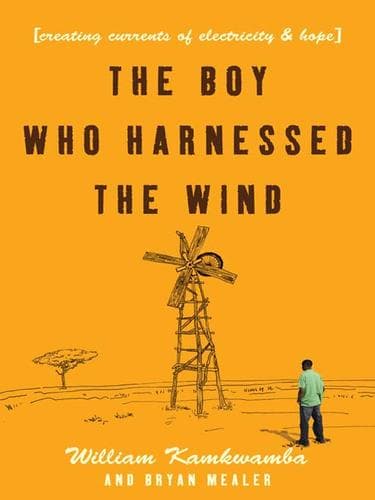
When famine struck Malawi in 2001, fourteen year old William Kamkwamba was forced to drop out of school because his family could not afford the fees. Using a library book about energy, scrap bicycle parts, and materials scavenged from a junkyard, he built a functioning windmill that powered lights and eventually a water pump for his village. This is a story about ingenuity, persistence, and the stubborn refusal to accept that your circumstances define your limits.
Kamkwamba's story resonates because it is so specifically detailed about the practical challenges of invention in a resource scarce environment, from the difficulty of finding PVC pipe in rural Malawi to the neighbors who called him crazy for climbing a tower made of scrap wood. The memoir, co written with journalist Bryan Mealer, captures the texture of daily life in a subsistence farming community with dignity and specificity rather than pity or sentimentality. Kamkwamba's persistence is extraordinary; he continued visiting the library and experimenting even after his family was surviving on one meal a day. The book also functions as an introduction to the physics of wind energy that is more engaging than any textbook. After a TED talk brought his story to international attention, Kamkwamba received scholarships, attended Dartmouth College, and returned to Malawi to continue working on renewable energy projects.
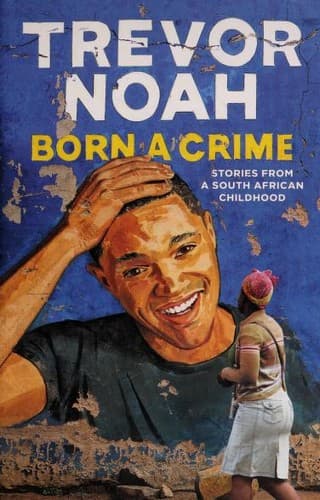
Born a Crime
(2016)Trevor Noah was born to a Black Xhosa mother and a white Swiss father during apartheid in South Africa, when their relationship was literally a crime. His memoir weaves together stories of growing up mixed race in a society that had no category for him, from hiding indoors to avoid being seen to hustling pirated CDs in the township of Soweto. Noah writes with the timing of a stand up comedian and the insight of someone who learned to navigate between worlds from birth.
Noah achieves something difficult by being simultaneously very funny and very serious, often within the same paragraph. His descriptions of apartheid's absurdities, like the racial classification system that assigned him different races depending on who he was standing next to, reveal how ridiculous oppression looks when examined closely while never minimizing its real violence. His mother Patricia is the book's true hero, a woman of extraordinary courage and fierce Christianity who defied apartheid, raised her son to think independently, and survived being shot in the head by an abusive partner. Noah's multilingualism, he speaks six languages, becomes both a survival tool and a metaphor for the code switching that marginalized people perform every day. The memoir also serves as one of the most accessible introductions to the history and aftermath of apartheid for readers unfamiliar with South African history.
The Art of War
(-500)Sun Tzu's ancient Chinese treatise on military strategy distills the principles of conflict into short, enigmatic chapters that read like a combination of philosophy and poetry. Each passage rewards rereading, revealing new layers of meaning about competition, preparation, and the nature of power. Two and a half thousand years after it was written, generals, coaches, CEOs, and chess players still reach for it when they need to think more clearly about any kind of contest.
Sun Tzu's foundational insight, that the supreme art of war is to subdue the enemy without fighting, overturned the assumption that military success requires brute force and replaced it with a system built on intelligence, deception, and strategic patience. The text's brevity is part of its genius; each chapter is only a few pages long, which has allowed it to be interpreted and reinterpreted across cultures, centuries, and disciplines. Napoleon reportedly studied it, and both Mao Zedong and Ho Chi Minh credited it as a major influence on their guerrilla warfare strategies. In the modern world, the text has been adopted far beyond the military, appearing on reading lists for business strategy, sports coaching, litigation, and political campaigning. The book's applicability to any competitive situation is what has kept it in continuous circulation for over 2,500 years, making it arguably the most influential nonfiction text ever written.
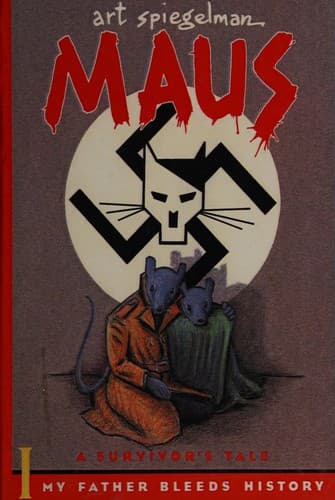
Maus
(1986)Art Spiegelman draws his father Vladek's experience surviving the Holocaust, depicting Jews as mice, Germans as cats, and Poles as pigs in a visual metaphor that is both startlingly simple and deeply unsettling. The story alternates between Vladek's wartime memories and Art's present day struggle to record them, revealing the friction between father and son alongside the historical horror. It is the most important graphic novel ever published, and its power comes from the tension between its cartoon form and the enormity of what it depicts.
Spiegelman spent thirteen years creating Maus, serializing it in his avant garde comics magazine Raw, and the result changed what the world believed comics could accomplish. The animal metaphor, which initially seems reductive, actually forces readers to confront how dehumanization works, making the racial categorizations of the Nazi regime visible in every panel. The intergenerational narrative is equally important; Art's difficult relationship with his demanding, neurotic father Vladek shows how trauma echoes across generations, affecting people who never experienced it directly. In 1992, Maus became the only graphic novel ever to win the Pulitzer Prize, and the committee had to create a special category because it did not fit existing ones. The book was controversially banned by a Tennessee school board in 2022, which triggered a massive spike in sales and introduced it to a new generation of readers.
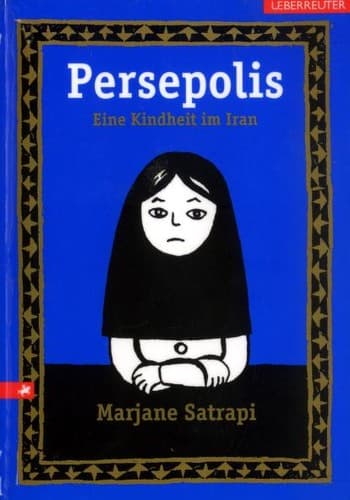
Persepolis
(2000)Marjane Satrapi was ten years old when the Islamic Revolution transformed Iran, and her memoir in stark black and white panels traces her journey from a rebellious child in Tehran to a lonely teenager in Vienna and back again. Satrapi draws herself as a small, defiant figure against the enormous forces of history, finding humor and humanity in circumstances that could easily overwhelm. The art is deceptively simple, with bold lines and minimal detail that somehow convey more emotion than photorealism could.
Satrapi achieved something remarkable by making the Iranian Revolution comprehensible and personal for Western readers without ever simplifying it. Her family's story, progressive intellectuals caught between the brutality of the Shah and the repression of the new theocracy, demolishes the idea that Iran is a monolithic culture. The memoir's power comes from its specific, often funny details: young Marjane pretending to be a revolutionary, listening to Iron Maiden tapes smuggled under her veil, arguing with God in her bedroom. Satrapi also refuses to present herself as a pure hero, honestly depicting her own selfishness, cowardice, and mistakes during her years in Europe. The graphic novel format allows her to convey political history, personal memory, and emotional truth simultaneously in ways that prose alone could not accomplish.
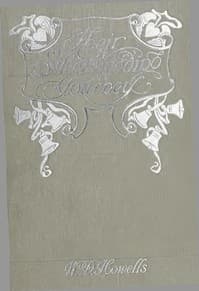
March (Trilogy)
(2013)Congressman John Lewis tells the story of the civil rights movement from the inside, beginning with his childhood in rural Alabama and building through the Nashville sit ins, the Freedom Rides, and the march across the Edmund Pettus Bridge in Selma. Co written with Andrew Aydin and illustrated by Nate Powell, the trilogy renders moments of extraordinary courage and sickening violence with equal clarity. Reading it feels less like studying history and more like witnessing it.
Lewis and Aydin structured the trilogy around the day of Barack Obama's inauguration, using Lewis's memories as a framework that gives the civil rights narrative both historical sweep and personal urgency. Nate Powell's artwork is extraordinary, using heavy blacks and dynamic panel layouts to convey both the claustrophobia of a jail cell and the grandeur of the March on Washington. The trilogy does not sanitize the violence of the movement; the Bloody Sunday pages, showing peaceful marchers beaten by state troopers, are among the most powerful images in graphic novel history. Lewis insisted on depicting his own fear and doubt alongside his courage, which makes the heroism feel earned rather than mythologized. The trilogy won the National Book Award for Young People's Literature, making it the first graphic novel to win a National Book Award in any category.
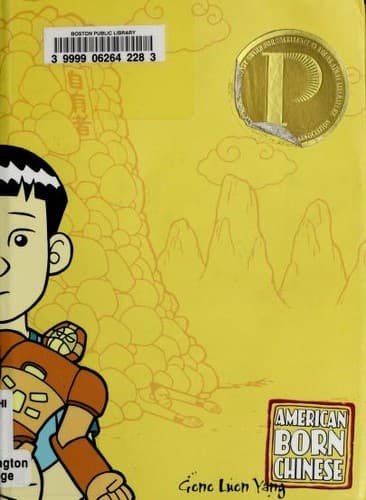
American Born Chinese
(2006)Gene Luen Yang weaves together three stories: a Chinese American boy named Jin Wang struggling to fit in at his mostly white school, the legendary Monkey King from Chinese mythology fighting for respect among the gods, and a sitcom style nightmare featuring a grotesque Chinese stereotype named Chin Kee. The three narratives collide in a twist that reframes everything, transforming what seemed like separate stories into a unified meditation on identity, shame, and self acceptance.
Yang took an enormous risk by putting the most offensive Asian stereotypes imaginable on the page through the character of Chin Kee, complete with buckteeth, an accent, and a laugh track, then used the reader's discomfort to make a devastating point about how stereotypes are internalized by the very people they target. The Monkey King sections draw on the classic Chinese novel Journey to the West with gorgeous, dynamic artwork that shifts in style depending on which storyline is being told. Yang was the first graphic novelist to be nominated for a National Book Award, and his win of the Michael L. Printz Award signaled mainstream literary acceptance of the graphic novel form for young adults. The book's three strand structure is intricate and rewarding, revealing its full design only in the final pages.
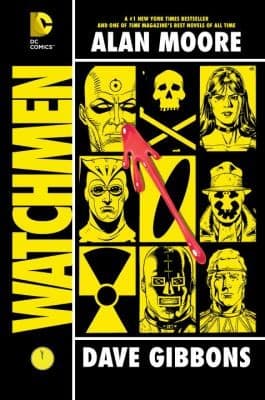
Watchmen
(1986)In an alternate 1985 where Richard Nixon is still president and masked vigilantes have been outlawed, someone is killing former superheroes. The investigation pulls the reader into a densely layered narrative that deconstructs the very idea of the superhero, asking what kind of person would actually put on a costume and fight crime, and whether the answer should terrify us. Moore and Gibbons created a work so structurally intricate that new details emerge on every rereading.
Alan Moore and Dave Gibbons did not just write a great superhero story; they dismantled the genre and examined every assumption it rested on. Each of the central characters represents a different archetype taken to its logical and disturbing conclusion: the godlike being who loses touch with humanity, the billionaire who believes his intelligence justifies any action, the vigilante whose rigid morality is indistinguishable from psychopathy. Gibbons's nine panel grid creates a visual rhythm that Moore uses for extraordinary effects, including an issue structured as a perfect palindrome. The book also functions as an alternate history of the Cold War, exploring how the existence of a genuine superman would reshape geopolitics. Time magazine named Watchmen one of the 100 best English language novels published since 1923, placing it alongside works by Joyce, Nabokov, and Morrison.
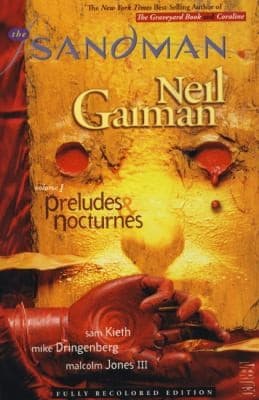
Morpheus, the Lord of Dreams, is captured by an occultist in 1916 and imprisoned for seventy years. When he finally escapes, weakened and furious, he must cross through Hell, battle a demon, and confront a serial killer to recover the three tools of his power. Neil Gaiman blends mythology, horror, and literary fiction into a comic book unlike anything that existed before it.
Gaiman began The Sandman within the conventions of DC Comics horror, but over 75 issues he transformed it into an epic mythological narrative that drew on Shakespeare, Greek mythology, Norse legends, and world religions. This first volume still bears traces of its superhero origins, including guest appearances by established DC characters, but the seeds of something far more ambitious are visible in every issue. The 'Sound of Her Wings' issue, introducing Morpheus's sister Death as a warm, compassionate goth girl rather than a skeletal reaper, is frequently cited as one of the greatest single issues in comics history. Gaiman's literary ambition gave comics credibility in bookstores and universities, and The Sandman was the first monthly comic to win a World Fantasy Award. The series proved that serialized comics could tell stories with the depth, complexity, and emotional resonance of the best literary fiction.

Fun Home
(2006)Alison Bechdel's graphic memoir traces her relationship with her father, a high school English teacher, funeral home director, and closeted gay man whose secret life unraveled just as she was coming to terms with her own sexuality. Bechdel draws her family home, the funeral parlor, and her college dorm with meticulous, almost obsessive detail, turning every room into a psychological portrait. The memoir is structured around literary references, particularly Joyce, Fitzgerald, and Greek mythology, which Bechdel uses not as decoration but as a framework for understanding her family's hidden emotional architecture.
Bechdel spent seven years drawing and redrawing Fun Home, photographing herself in every pose to ensure anatomical accuracy, and the resulting artwork has a density and precision that rewards close study. The memoir's structure is nonlinear, circling back to key events and reinterpreting them with new information each time, mirroring the way memory itself works. Her father's death, which may have been a suicide, hangs over the narrative, and Bechdel's refusal to resolve the ambiguity is both honest and devastating. The book was adapted into a Broadway musical that won five Tony Awards, including Best Musical, an extraordinary achievement for a story about queer identity, family secrecy, and literary obsession. Bechdel is also the creator of the 'Bechdel Test' for evaluating female representation in fiction, which originated in her comic strip Dykes to Watch Out For.
Best Classic Books and Movies for Teens (Ages 14–17)
Every teenager deserves to experience the best classic books and movies for teens. Our list includes must-read novels for high schoolerslike “To Kill a Mockingbird” and “1984,” essential coming-of-age movieslike “The Breakfast Club” and “Lady Bird,” and thought-provoking sci-fi and fantasy books for young adultslike “Dune” and “The Lord of the Rings.”