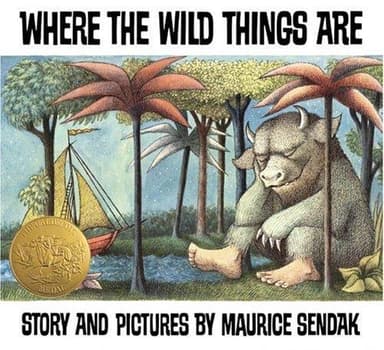
Where the Wild Things Are (1963)
About This Book
Max gets sent to bed without supper and sails away to a strange island where enormous wild creatures roar and gnash their teeth. He tames them all, becomes their king, and leads a glorious rumpus before choosing to return home to a warm meal. It is a ten minute read that feels like an entire odyssey.
Why It's a Classic
Maurice Sendak accomplished something that almost no other picture book author has managed: he told a complete emotional arc in just 338 words. The Wild Things are genuinely frightening in their yellow eyes and terrible claws, and Sendak never softens them. Max does not defeat the monsters by being brave or clever; he stares into their eyes without blinking, and they recognize a fellow wild thing. The illustrations grow from small framed panels to full double page spreads as Max's imagination expands, then shrink back down as he returns home. That visual structure mirrors the rhythm of a child's tantrum: the swell of fury, the peak of abandon, the quiet exhaustion afterward. The final image of supper waiting in his room, still hot, says everything about parental love without a single word of explanation.
Fun Fact
Sendak originally planned to draw wild horses, not monsters, but realized he could not draw horses well enough. He based the Wild Things on his Brooklyn relatives who visited on Sundays and would pinch his cheeks, saying they could eat him up. The book was so controversial when published that many libraries refused to shelve it, believing it would frighten children.
Parent Note
Some very young children (under three) may find the Wild Things' teeth and claws genuinely scary, especially in dimmer bedtime lighting. The story resolves warmly, though, and most kids over three love the wildness of it. Max does misbehave at the start (he chases the dog with a fork), which some parents use as a conversation starter about big feelings.
Quick Facts
- Year
- 1963
- Type
- 📚 Book
- Category
- Adventure
- Age Group
- Little Kids (Ages 3–6)