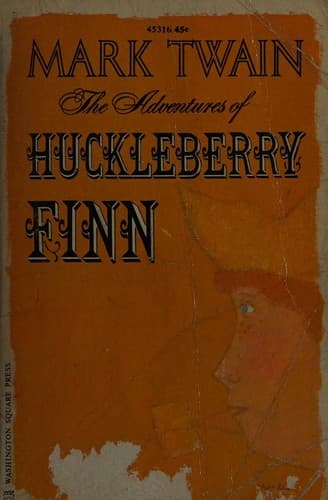
Adventures of Huckleberry Finn (1884)
About This Book
Huck Finn fakes his own death to escape his abusive father and sets off down the Mississippi River on a raft with Jim, an escaped slave, encountering con artists, feuding families, and the full spectrum of American society along the way. Twain writes in Huck's own voice, a gorgeous vernacular that captures the rhythms of speech along the river with perfect pitch. The moral heart of the book is Huck's growing realization that Jim is a full human being deserving of freedom, even as everything his society taught him says otherwise.
Why It's a Classic
Ernest Hemingway famously said that all modern American literature comes from this one book, and while that is an exaggeration, it captures the way Twain's use of vernacular language and his unflinching social satire changed what American fiction could do. The central moral crisis of the novel, Huck's decision to help Jim escape slavery even though he believes he will go to hell for it, is one of the most powerful moments in literature, a child choosing compassion over every authority figure and institution in his world. Twain uses humor as a delivery system for devastating social criticism, exposing the hypocrisy of a society that considers itself civilized while enslaving human beings. The river itself becomes a character, and the passages describing dawn on the Mississippi are among the most beautiful nature writing in the English language.
Fun Fact
Twain wrote the novel in bursts over seven years, putting it aside multiple times when he got stuck. He originally envisioned it as a simple sequel to Tom Sawyer, but the character of Jim transformed the book into something far more ambitious and morally complex. The Concord, Massachusetts public library banned it immediately upon publication, calling it "trash and suitable only for the slums," which Twain said was the best advertising he could have hoped for.
Parent Note
The book uses the N-word frequently, reflecting the language of its time period and setting, which Twain deploys to expose the dehumanizing reality of slavery. This is the most commonly discussed aspect of teaching the book and benefits greatly from parent or teacher context. The portrayal of Jim has been debated for over a century; some scholars see it as groundbreaking empathy, while others find it limited by Twain's own era.
Quick Facts
- Year
- 1884
- Type
- 📚 Book
- Category
- Classics / Literature
- Age Group
- Tweens (Ages 11–13)