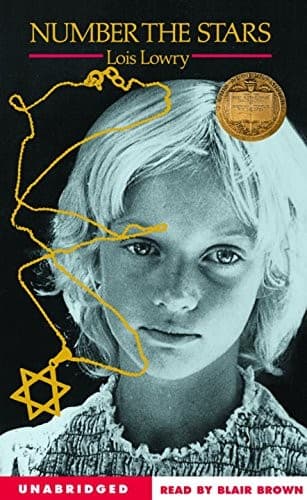
Number the Stars (1989)
About This Book
Ten-year-old Annemarie Johansen must summon courage she did not know she had when her family undertakes a dangerous mission to smuggle her Jewish best friend Ellen out of Nazi-occupied Denmark. Lowry writes with restraint and precision, letting the terror of the occupation filter through a child's perspective where a German soldier's boots in the doorway carry the weight of an entire regime. The friendship between Annemarie and Ellen anchors the story in something personal and real.
Why It's a Classic
Lois Lowry found exactly the right scope for introducing the Holocaust to young readers: a single family, a single friendship, and a single act of courage, rather than trying to convey the full scale of the horror, which would overwhelm readers of this age. The novel is based on true events; the Danish resistance really did smuggle nearly the entire Jewish population of Denmark to safety in Sweden, and Lowry grounds her fiction in that extraordinary historical reality. Annemarie's bravery is convincingly childlike; she is terrified and uncertain, not heroic in a storybook way, which makes her actions feel genuinely courageous rather than predetermined. The Newbery Medal recognized a book that handles one of history's darkest chapters with grace, honesty, and an unwavering focus on the human capacity for goodness under impossible circumstances.
Fun Fact
Lowry was inspired to write the book after seeing a photograph of her friend Annelise Platt as a child in Denmark during the war. The handkerchief soaked in rabbit blood and cocaine that is used to confuse German dogs' sense of smell in the novel's climax is based on a real technique used by the Danish resistance, which was only confirmed by scientists decades after the war.
Parent Note
The book introduces children to the Holocaust through a personal, child-centered story rather than depicting concentration camps or mass violence. German soldiers are frightening but the actual violence is kept off-page. This is widely considered one of the best entry points for young readers learning about this period of history.
Quick Facts
- Year
- 1989
- Type
- 📚 Book
- Category
- Classics / Literature
- Age Group
- Tweens (Ages 11–13)