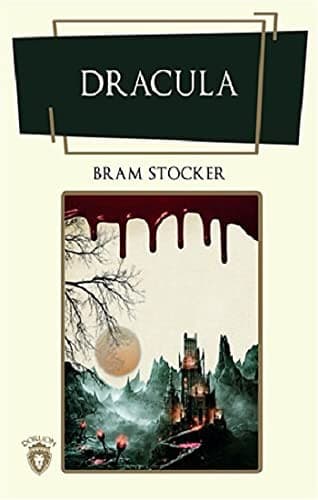
Dracula (1897)
About This Book
A young English solicitor travels to Transylvania to assist a nobleman with a real estate transaction and discovers that his client is a centuries-old vampire who intends to move to England and establish a new hunting ground among the teeming population of London. A band of determined men and one extraordinary woman must track and destroy the Count before he spreads his curse across the modern world. Bram Stoker created the vampire myth as we know it, and every vampire in film, television, and fiction since is a descendant of this novel.
Why It's a Classic
Stoker's epistolary structure, which tells the story entirely through diary entries, letters, newspaper clippings, and phonograph recordings, was a stroke of genius that gave the novel an atmosphere of documentary authenticity and allowed multiple perspectives to build a composite picture of a threat that no single character can fully comprehend. Count Dracula is one of fiction's supreme creations: courteous, intelligent, aristocratic, and utterly predatory, a figure who embodies Victorian anxieties about immigration, sexuality, disease, and the collision between ancient aristocratic power and modern democratic society. The novel's first act, Jonathan Harker's imprisonment in Castle Dracula, is one of the great horror sequences in literature, building dread through accumulating details (the absence of mirrors, the Count crawling down the castle wall, the three female vampires). Mina Harker, who brings modern technology (typewriters, train schedules, shorthand) to bear against an ancient evil, is a more complex and capable heroine than popular culture's reduction of her to a damsel in distress suggests. The novel invented or codified virtually every trope of vampire fiction: the stake through the heart, the garlic, the inability to cast a reflection, the seductive bite.
Fun Fact
Stoker spent seven years researching the novel, drawing on Eastern European folklore, medical accounts of blood diseases, and the history of Vlad the Impaler, the fifteenth-century Wallachian ruler whose patronymic 'Dracula' means 'son of the dragon.' He originally named the vampire 'Count Wampyr' before discovering the name Dracula during his research. Stoker never visited Transylvania; his descriptions were based on travel books and his own imagination. The novel was not a major commercial success in Stoker's lifetime, and his widow had to fight a legal battle against the producers of the unauthorized 1922 film Nosferatu. The novel has never been out of print and has inspired thousands of adaptations.
Parent Note
The novel contains scenes of vampiric predation (biting, blood drinking), the staking and decapitation of vampires, sexual undertones (particularly in the scenes with the three female vampires and Lucy's transformation), a character driven to madness, and an atmosphere of sustained gothic dread. The sexual content is heavily coded but unmistakable, and Victorian anxieties about female sexuality are central to the narrative. The epistolary format and Victorian prose require some patience. The novel is roughly 400 pages. Suitable for readers fourteen and up. An essential foundational text for horror fiction and one of the most influential novels ever written.
Quick Facts
- Year
- 1897
- Type
- 📚 Book
- Category
- Gothic & Horror Classics
- Age Group
- Adults (Ages 18+)