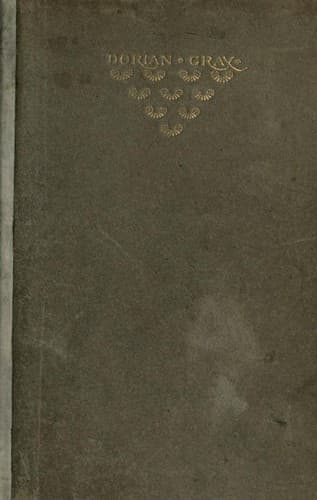
The Picture of Dorian Gray (1890)
About This Book
A stunningly beautiful young man sits for a portrait and, influenced by a cynical aristocrat's philosophy of pleasure, wishes that the painting would age while he remains forever young. The wish is granted, and as Dorian Gray pursues a life of sensation without consequence, the portrait in the locked attic grows increasingly hideous, recording every sin its owner commits. Oscar Wilde wrote a gothic fable about vanity, corruption, and the price of living without moral accountability.
Why It's a Classic
Wilde embedded within his sensational gothic plot a genuine philosophical debate between three positions: Lord Henry's aesthetic hedonism (live for pleasure, avoid commitment, treat life as art), Basil Hallward's moral idealism (beauty reflects goodness, and art is a window to truth), and Dorian's discovery that separating action from consequence does not eliminate consequence but merely postpones and concentrates it. Lord Henry's epigrams ('The only way to get rid of a temptation is to yield to it') are so brilliantly quotable that they risk making evil attractive, which is precisely Wilde's point: the seductive surface of wit can conceal the deepest moral rot, and Dorian's corruption begins with his acceptance of Lord Henry's charming philosophy. The portrait itself is one of literature's most powerful symbols: a mirror that shows not appearance but truth, growing more hideous as Dorian's face remains untouched, until the final scene reveals the horror that beauty has been hiding. Wilde was tried and imprisoned for gross indecency three years after publication, and the novel's themes of secret lives and hidden truths resonate with his own biography.
Fun Fact
The novel was initially published in a magazine in 1890 and caused a scandal: reviewers called it immoral and decadent, and the editor had deleted approximately five hundred words without Wilde's permission, removing passages with homoerotic content. Wilde revised and expanded the novel for book publication in 1891, adding the preface with its famous declaration that 'There is no such thing as a moral or an immoral book. Books are well written, or badly written. That is all.' During Wilde's trials in 1895, passages from the novel were read aloud as evidence of his immorality. The novel is Wilde's only novel; his other works are plays, essays, poetry, and fairy tales.
Parent Note
The novel contains murder, suicide, implied sexual content (including homoerotic subtext that was explicit in Wilde's original manuscript), drug use (opium), psychological corruption, and a graphic final scene of transformation. The violence is described in Victorian prose that is suggestive rather than explicit. Lord Henry's philosophy, presented with such wit and charm, can be genuinely seductive, which is the novel's intended effect and also its danger. The novel is relatively short (roughly 250 pages) and Wilde's prose is elegant and accessible. Suitable for readers fifteen and up. An essential text in Gothic literature and a fascinating document of Victorian anxieties about morality, beauty, and hidden lives.
Quick Facts
- Year
- 1890
- Type
- 📚 Book
- Category
- Gothic & Horror Classics
- Age Group
- Adults (Ages 18+)