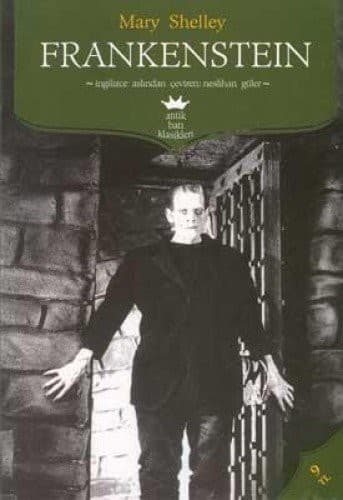
Frankenstein (1818)
About This Book
A brilliant young scientist discovers how to animate dead matter, creates a being of superhuman size and strength, and then abandons it in horror, setting in motion a tragedy of rejection, loneliness, and escalating revenge that destroys everyone the scientist loves. Mary Shelley was eighteen years old when she wrote the novel that invented science fiction, and its questions about creation, responsibility, and what we owe the beings we bring into existence have only grown more urgent.
Why It's a Classic
Shelley's most radical achievement was making the creature articulate: when the monster tells his story in the novel's central section, describing how he taught himself to read, how he observed a family from hiding and learned to love them, and how their rejection when he revealed himself drove him to violence, the reader's sympathy shifts entirely, and Frankenstein transforms from the hero of a horror story into the villain of a tragedy. The novel is structured as a series of nested narratives (Walton's letters contain Frankenstein's story, which contains the creature's story), and this layering emphasizes how perspective determines whose suffering matters. Shelley embedded within her gothic tale a genuine philosophical argument about the ethics of creation: Victor Frankenstein's sin is not creating life but refusing to take responsibility for it, and this theme resonates with every subsequent debate about scientific ethics, from nuclear weapons to genetic engineering to artificial intelligence. The novel's subtitle, 'The Modern Prometheus,' places the story within a mythological tradition that gives it weight far beyond its gothic origins.
Fun Fact
Shelley conceived the story during the famous summer of 1816 at the Villa Diodati by Lake Geneva, where she was staying with Percy Bysshe Shelley, Lord Byron, and John Polidori. Byron proposed that each guest write a ghost story, and Shelley's contribution became Frankenstein. She was inspired by a dream in which she saw 'the pale student of unhallowed arts kneeling beside the thing he had put together.' The volcanic eruption of Mount Tambora in 1815 had caused a 'Year Without a Summer' that kept the group indoors, and the dark, stormy weather directly influenced the novel's atmosphere. Shelley published the novel anonymously in 1818, and many reviewers assumed it was written by Percy Shelley.
Parent Note
The novel contains murder (including the killing of a child), execution, psychological anguish, abandonment, and a creature suffering from extreme loneliness and rejection. The violence is described in restrained, early nineteenth century prose and is not graphic by modern standards. No sexual content. The language is archaic and the nested narrative structure can be challenging for some readers. The novel is relatively short (roughly 280 pages). Suitable for readers fourteen and up. Essential reading for understanding science fiction, the horror genre, and the ethical questions surrounding scientific creation. The 1818 text is generally preferred over the revised 1831 edition.
Quick Facts
- Year
- 1818
- Type
- 📚 Book
- Category
- Gothic & Horror Classics
- Age Group
- Adults (Ages 18+)