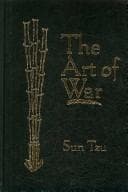
The Art of War (-500)
About This Book
A Chinese military strategist distills the principles of conflict into thirteen chapters of compressed, aphoristic wisdom covering planning, maneuvering, terrain, intelligence, deception, and the ultimate goal of winning without fighting. Sun Tzu wrote the oldest and most influential treatise on strategy ever composed, and its principles have been applied to business, sports, law, and personal relationships for two and a half millennia.
Why It's a Classic
Sun Tzu's genius was recognizing that warfare is primarily psychological and informational rather than physical: the general who understands his enemy's weaknesses, controls the flow of information, and positions his forces before battle begins has already won. The text's compression is its power; each line is dense with implication, and sentences like 'All warfare is based on deception' and 'Know your enemy and know yourself; in a hundred battles you will never be in peril' have become proverbs precisely because they apply far beyond the battlefield. The treatise's most radical insight is that the supreme excellence of a general is not winning battles but winning without fighting, through strategic positioning, diplomatic maneuvering, and psychological dominance. This philosophy of minimal force and maximum preparation has influenced military thinking from Napoleon to the Viet Cong, and its application to business strategy (the corporate world loves to quote Sun Tzu) reflects the text's universality.
Fun Fact
Whether Sun Tzu was a real historical figure or a composite is debated by scholars; the text may have been compiled from the writings of multiple military strategists over several centuries. The oldest known manuscript of the text was discovered in a tomb in Yinqueshan, Shandong, in 1972, and dates to approximately 140 BCE. The text was introduced to the Western world through a French translation by Jesuit missionary Jean Joseph Marie Amiot in 1772, and Napoleon is said to have studied it. The book is required reading at most military academies worldwide, and its influence on business culture is so pervasive that Sun Tzu quotes appear in corporate boardrooms, self-help books, and hip-hop lyrics.
Parent Note
The text discusses warfare, strategy, espionage, the use of fire and water as weapons, and the management of armies. The language is abstract and strategic rather than graphic. There is no violence, sexual content, or strong language in the text itself; it is purely instructional. The extreme brevity of the text (roughly eighty pages in most translations) means it can be read in a single sitting. Different translations vary significantly in interpretation. The Lionel Giles translation is the classic English version; the Samuel B. Griffith translation includes extensive commentary. Suitable for readers fourteen and up. Essential reading for anyone interested in strategy, leadership, or military history.
Quick Facts
- Year
- -500
- Type
- 📚 Book
- Category
- Philosophy & Ideas
- Age Group
- Adults (Ages 18+)