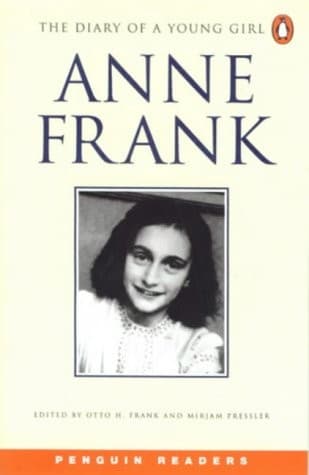
The Diary of a Young Girl (1947)
About This Book
Anne Frank, a thirteen year old Jewish girl hiding from the Nazis in a secret annex above her father's office in Amsterdam, keeps a diary for two years, recording the daily life, fears, frustrations, and hopes of eight people living in cramped quarters with the constant threat of discovery and death. The diary is the most intimate and human record of the Holocaust ever written.
Why It's a Classic
Anne's diary achieves its power not through depicting atrocity (the camps are the horror that exists outside the annex's walls, approaching but never arriving within the diary's pages) but through presenting a fully alive adolescent consciousness in the process of becoming: she fights with her mother, develops a crush on Peter van Pels, examines her own character with pitiless honesty, and expresses ambitions to become a writer, all while knowing that the people hunting her are very close. The intimacy of the diary form creates a relationship between reader and writer that is unique in Holocaust literature: you are not reading about Anne Frank, you are reading her thoughts, and the knowledge of what happened after the last entry gives every hopeful sentence an additional weight of tragedy. Her entry declaring that 'in spite of everything I still believe that people are really good at heart' is one of the most quoted sentences of the twentieth century, and its sincerity, given the context, is either the most inspiring or the most heartbreaking statement imaginable.
Fun Fact
Anne's father, Otto Frank, the only member of the family to survive the war, edited the diary for publication, removing passages he considered too personal, including Anne's frank discussions of her sexuality and her critical comments about her mother. A 'definitive edition' published in 1995 restored much of this material. Anne herself had begun revising her diary for possible publication after hearing a radio broadcast by the Dutch government in exile calling for wartime diaries to be preserved. The Franks were betrayed and arrested in August 1944; Anne died of typhus in Bergen-Belsen concentration camp in February or March 1945, just weeks before the camp was liberated. The diary has been translated into more than seventy languages and has sold over thirty million copies.
Parent Note
The diary describes the constant fear of discovery and deportation, the psychological strain of confinement, family conflict, adolescent sexuality (including Anne's exploration of her own body, restored in the definitive edition), and the growing threat of the Holocaust. The diary ends abruptly because of the family's arrest, and what happened afterward (deportation, concentration camps, death) must be learned from other sources. The contrast between Anne's vibrant personality and the fate that awaited her is the source of the diary's devastating emotional impact. The diary is roughly 300 pages. Suitable for readers twelve and up. One of the most important documents of the twentieth century.
Quick Facts
- Year
- 1947
- Type
- 📚 Book
- Category
- Non-Fiction / Memoir
- Age Group
- Adults (Ages 18+)