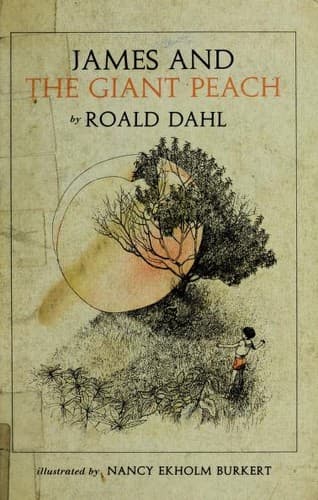
James and the Giant Peach (1961)
About This Book
After his parents are killed by an escaped rhinoceros, young James Henry Trotter is sent to live with his two horrible aunts, Spiker and Sponge, who make his life miserable. When a mysterious old man gives James a bag of magical crocodile tongues, they accidentally transform a peach tree into a fruit the size of a house, and James crawls inside to find a crew of giant, talking insects ready for the adventure of a lifetime. The peach rolls into the sea, gets airborne via seagulls, and eventually crash-lands on the Empire State Building.
Why It's a Classic
This was Dahl's first children's novel, and it already displays his signature blend of cruelty, wonder, and exuberant imagination. The aunts are memorably vile, drawn with the kind of exaggerated grotesqueness that children find both repulsive and satisfying, because the reader knows they'll get what's coming to them. Each insect aboard the peach has a distinct personality and purpose; the Centipede's bravado, the Earthworm's anxiety, and the Ladybug's maternal warmth create a found family that James desperately needs. The book moves with dream logic, lurching from one impossible set piece to the next, but Dahl's confident narration makes it all feel inevitable. The ending, with the peach pit installed in Central Park and children climbing through it, is one of the most satisfying conclusions in children's fiction.
Fun Fact
Dahl originally wrote the story with a giant cherry instead of a peach, but changed it because he felt a peach was bigger, squishier, and more beautiful. The book was controversial when first published; it was banned in some communities for its depiction of the aunts' deaths and what critics called an anarchic disrespect for authority. Dahl wrote the book in a small brick hut in his garden, sitting in an old armchair with a board across his lap as a writing desk.
Parent Note
James's parents die in the opening pages (eaten by a rhinoceros), and his aunts are verbally abusive and physically neglectful before meeting a gruesome end. The tone is comic and fantastical throughout, so most children process these elements as fairy tale darkness rather than realistic trauma. Suitable for ages 6 and up as a read-aloud, or ages 8 and up for independent reading.
Quick Facts
- Year
- 1961
- Type
- 📚 Book
- Category
- Fantasy / Sci-Fi
- Age Group
- Kids (Ages 7–10)