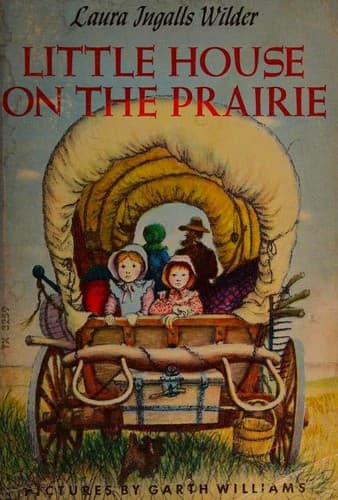
Little House on the Prairie (1935)
About This Book
The Ingalls family packs up their covered wagon and travels from Wisconsin to the Kansas prairie, where Pa builds a log cabin, Ma makes a home out of nothing, and young Laura discovers both the beauty and the danger of life on the open grassland. Prairie fires, wolf packs, malaria, and encounters with Native Americans fill the pages alongside quieter moments of family warmth and frontier ingenuity. The book immerses you in a world where survival depends on skill, courage, and the people beside you.
Why It's a Classic
Laura Ingalls Wilder drew on her own childhood memories to create a portrait of frontier life so vivid and specific that it has shaped how millions of Americans imagine the pioneer era. The domestic details are extraordinary: how Pa builds a door without nails, how Ma makes butter, how the family stretches every resource to its limit. Wilder's narrative voice is deceptively simple, a child's perspective that captures adult hardships without adult anxiety. The relationship between Pa and Laura anchors the emotional core of the series; Pa's fiddle playing by firelight is an image that burns itself into memory. Garth Williams's later illustrations added another iconic visual layer to the books. The series as a whole, nine books covering Laura's life from age four to her marriage, constitutes one of the great memoir projects in American literature.
Fun Fact
Wilder did not begin writing the Little House books until she was in her sixties, prompted in part by the stock market crash of 1929 and the need for income. Her daughter, Rose Wilder Lane, was a successful journalist and novelist who helped edit and shape the manuscripts, and the extent of her involvement has been debated by scholars for decades. The actual cabin the family built in Kansas was rediscovered and reconstructed on its original site near Independence, Kansas.
Parent Note
The books depict frontier hardships including illness, near-starvation, and dangerous encounters with wildlife. The portrayal of Native Americans reflects 19th century settler perspectives and contains language and attitudes that many families will want to discuss. These conversations are valuable and worth having. Best for ages 8 and up.
Quick Facts
- Year
- 1935
- Type
- 📚 Book
- Category
- Classics / Literature
- Age Group
- Kids (Ages 7–10)