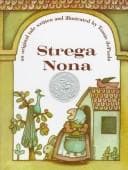
Strega Nona (1975)
About This Book
In a Calabrian village, the old witch Strega Nona leaves her helper Big Anthony alone with her magic pasta pot, despite warning him never to touch it. Big Anthony fires up the pot and feeds the whole town, then watches in horror as the pasta keeps coming and coming and will not stop. The flood of pasta through the village streets is one of the great slapstick images in picture books.
Why It's a Classic
Tomie dePaola retold an old Italian folktale and made it so completely his own that most people think he invented it. His folk art illustrations, with their warm earth tones and rounded forms, create a world that feels both ancient and cozy, like a story your grandmother might tell by the fire. The comedy works because dePaola understood pacing: Big Anthony's confidence grows panel by panel until the pasta overflows, and the catastrophe escalates in perfect comedic rhythm. The punishment at the end, where Big Anthony must eat all the excess pasta, is satisfying in the way that fairy tale justice always is, proportional and slightly absurd. DePaola also gave Strega Nona a quiet dignity that makes her more than just a plot device; she is wise, patient, and a little bit amused by human foolishness. The book won a Caldecott Honor and launched a beloved series, but this first volume remains the tightest and funniest of them all.
Fun Fact
DePaola based the character of Strega Nona partly on his own Italian grandmother and partly on the folk figure of "La Strega," the village wise woman found throughout southern Italian folklore. He was so prolific that he wrote or illustrated more than 270 books over his career. DePaola once revealed that the three magic kisses Strega Nona blows to stop the pot were his favorite detail in the book because they suggested that the deepest magic is always simple and human.
Parent Note
The story is entirely gentle and comedic. Big Anthony gets punished by having to eat a mountain of pasta, which kids find hilarious rather than upsetting. The word "Strega" means "witch" in Italian, but Strega Nona is presented as a kindly healer, not a frightening figure. This is a great book for ages three and up, and it works wonderfully as a read-aloud with its repetitive magical phrases.
Quick Facts
- Year
- 1975
- Type
- 📚 Book
- Category
- Fantasy
- Age Group
- Little Kids (Ages 3–6)