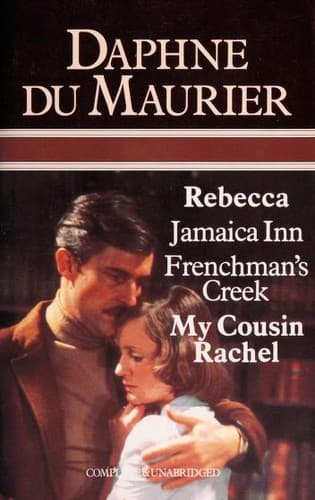
Rebecca (1938)
About This Book
A young, unnamed narrator marries the wealthy Maxim de Winter and moves into his grand estate, Manderley, only to discover that the memory of his first wife Rebecca dominates every room, every servant, and every conversation. The sinister housekeeper Mrs. Danvers keeps Rebecca's presence alive with chilling devotion. Du Maurier builds suspense through social anxiety and psychological manipulation rather than violence, making every awkward dinner and whispered comparison feel like a threat.
Why It's a Classic
Daphne du Maurier achieved something remarkable by making a dead woman the most vivid and powerful character in the novel, despite the fact that Rebecca never appears on the page. The unnamed narrator's insecurity and self doubt are rendered with such precision that readers physically cringe at her social missteps, creating a form of psychological suspense that is uniquely uncomfortable. Mrs. Danvers is one of fiction's great villains, operating through emotional manipulation rather than overt violence, and her scenes with the narrator are genuinely menacing. The novel also works as a sharp critique of class and gender expectations in 1930s England, showing how wealth and status can imprison rather than liberate. Its famous opening line, 'Last night I dreamt I went to Manderley again,' is one of the most recognized sentences in English literature.
Fun Fact
Du Maurier wrote Rebecca while living in Alexandria, Egypt, homesick and jealous of her husband's former fiancee, and she later admitted that those feelings of jealousy and displacement fueled the entire novel. Alfred Hitchcock's 1940 film adaptation won the Academy Award for Best Picture, though Hitchcock had a famously difficult relationship with du Maurier and changed the ending to satisfy censors. Du Maurier was sued for plagiarism by the estate of a Brazilian author, Carolina Nabuco, though she was ultimately cleared.
Parent Note
The novel deals with jealousy, psychological manipulation, and a revelation about domestic violence that is central to the plot. There is a suicide attempt that is depicted with some intensity. The gothic atmosphere can feel oppressive by design, and Mrs. Danvers's manipulation of the narrator is genuinely disturbing. There is no explicit sexual content. It is appropriate for teens 13 and up who enjoy psychological suspense and gothic atmosphere.
Quick Facts
- Year
- 1938
- Type
- 📚 Book
- Category
- Mystery
- Age Group
- Teens (Ages 14–17)