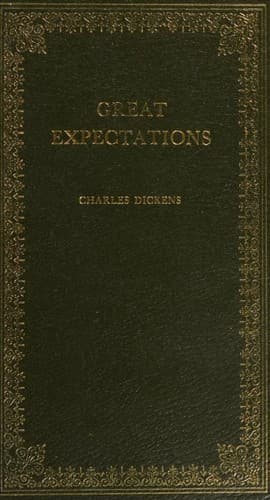
Great Expectations (1861)
About This Book
A poor orphan named Pip, raised by his abusive sister and her gentle blacksmith husband in the Kent marshes, receives a fortune from an anonymous benefactor and moves to London to become a gentleman, only to discover that the identity of his patron is not what he assumed, and that the class he aspired to join is not what he imagined. Charles Dickens wrote his most autobiographical and most perfectly constructed novel, a story about the gap between what we want to be and what we are.
Why It's a Classic
Dickens channeled his own experience of class mobility (from poverty to fame) into Pip's story, and the result is a novel that understands both the seductiveness and the emptiness of social ambition with an honesty that his earlier, more optimistic novels lacked. Miss Havisham, frozen in time in her decaying wedding dress amid a rotting feast, is one of literature's most unforgettable images, a woman who has turned her own trauma into a weapon against the next generation. The convict Magwitch, whose terrifying appearance in the opening chapter gives way to a revelation of extraordinary tenderness, is the novel's moral center: his love for Pip, expressed through the fortune he sends from Australia, is the purest emotion in the book, and Pip's initial revulsion when he learns the truth is the novel's most painful moment of self-recognition. Dickens originally wrote a happy ending but was persuaded by Bulwer-Lytton to change it, and both endings exist, each casting a different light on the novel's themes.
Fun Fact
Dickens serialized the novel in his own weekly magazine, All the Year Round, from December 1860 to August 1861, writing each installment under deadline pressure. The novel was partly inspired by his return visit to the marshes of Kent where he had grown up, and the landscape of the opening chapters draws on his childhood memories. Pip's name may have been suggested by a real person: Dickens knew a boy named Philip Pirrip in his youth. The two endings reflect a genuine artistic tension: the original unhappy ending is more consistent with the novel's themes, but the revised ending offers a grace note of hope. The novel has been adapted for film and television dozens of times.
Parent Note
The novel contains violence (a convict's pursuit, physical abuse of a child by his sister, a fire that disfigures a character), themes of class snobbery, criminality, disappointment, and the manipulation of children by damaged adults. Miss Havisham's psychological abuse of Estella and Pip is disturbing when examined closely. There is no sexual content or strong language by modern standards. The prose is Victorian but among Dickens' most accessible. The novel is roughly 500 pages. Suitable for readers fourteen and up. An excellent introduction to Dickens and one of the most widely taught novels in English literature.
Quick Facts
- Year
- 1861
- Type
- 📚 Book
- Category
- Classic Novels
- Age Group
- Adults (Ages 18+)