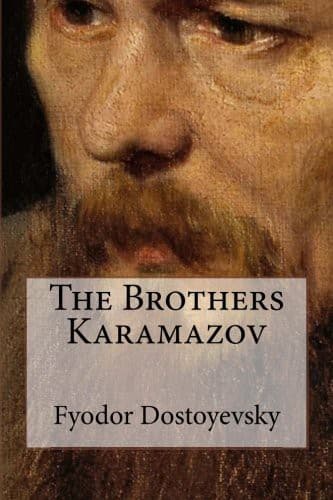
The Brothers Karamazov (1880)
About This Book
Three brothers with violently different temperaments, the intellectual atheist Ivan, the passionate sensualist Dmitri, and the gentle novice monk Alyosha, are drawn into a crisis when their contemptible father is murdered and the question of which brother committed the crime becomes inseparable from the question of which brother's philosophy of life is true. Dostoevsky wrote his final and greatest novel, a murder mystery that is also the most ambitious exploration of faith, doubt, and morality in all of fiction.
Why It's a Classic
Dostoevsky constructed the novel as a philosophical arena in which competing worldviews fight for supremacy through character and action rather than abstract argument. Ivan's chapter 'The Grand Inquisitor,' in which he tells Alyosha a parable about Jesus returning to earth during the Spanish Inquisition and being rejected by the Church, is the single most famous passage in Russian literature and one of the great challenges to religious faith ever composed. Dmitri's story is the novel's emotional engine: his explosive passion, his capacity for both tenderness and violence, and his wrongful conviction for his father's murder create a tragedy that is both personal and philosophical. Alyosha, the youngest brother, represents Dostoevsky's answer to Ivan's atheism, but Dostoevsky was honest enough to make Ivan's arguments stronger than Alyosha's rebuttals, which gives the novel its intellectual integrity. The courtroom scenes in the final section are riveting drama, and the verdict forces the reader to confront the gap between justice and truth. Freud called it 'the most magnificent novel ever written.'
Fun Fact
Dostoevsky died less than four months after completing the novel, and it was intended as the first part of a larger work that was never written. The 'Grand Inquisitor' chapter was so powerful that it has been excerpted and published as a standalone text, read by people who have never encountered the rest of the novel. Dostoevsky based the character of Fyodor Pavlovich Karamazov partly on his own father, who was murdered by his serfs (a connection Dostoevsky never publicly acknowledged). The novel was serialized in The Russian Messenger from January 1879 to November 1880, and readers waited anxiously for each installment. Einstein reportedly said that Dostoevsky taught him more than any scientist.
Parent Note
The novel contains parricide (the murder of a father), a wrongful conviction, scenes of violent passion, child abuse (described in Ivan's famous catalog of atrocities committed against children), sexual jealousy, psychological torment, and philosophical debates about the existence of God that are intellectually demanding. There is an attempted sexual assault. The epilepsy suffered by one character reflects Dostoevsky's own condition. The novel is roughly 800 pages and has a large cast of characters with Russian patronymics. The Pevear and Volokhonsky translation and the Ignat Avsey translation are both excellent. Suitable for readers seventeen and up. The greatest Russian novel and one of the essential works of world literature.
Quick Facts
- Year
- 1880
- Type
- 📚 Book
- Category
- Classic Novels
- Age Group
- Adults (Ages 18+)