Jane Eyre (1847)
About This Book
Orphaned, abused, and sent to a harsh charity school, Jane Eyre grows into a woman of fierce independence who takes a position as governess at the brooding Thornfield Hall, where she falls in love with her employer, Mr. Rochester, only to discover a terrible secret hidden in the attic. Charlotte Bronte writes with a raw emotional intensity that makes you feel Jane's loneliness, her passion, and her iron determination to be treated as an equal. This is one of the great love stories in English, and it belongs entirely to its heroine.
Why It's a Classic
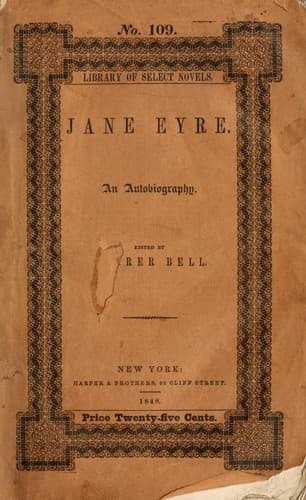
Bronte published under the male pseudonym Currer Bell in 1847, and critics who praised the novel's 'masculine vigor' were shocked to learn a woman had written it. Jane's declaration to Rochester, 'I am no bird; and no net ensnares me,' was a radical assertion of female autonomy for its era and remains powerful today. The novel essentially invented the modern romance narrative structure: two strong willed people drawn together, separated by secrets and moral obstacles, and ultimately reunited on equal terms. Bronte also wove in Gothic elements, from the mysterious laughter in the attic to the fire that transforms Thornfield, creating atmosphere that ranges from psychological realism to genuine horror. The character of Bertha Mason, Rochester's hidden first wife, has generated over a century of literary analysis and inspired Jean Rhys's brilliant postcolonial response novel, Wide Sargasso Sea.
Fun Fact
All three Bronte sisters published novels in the same year: Charlotte's Jane Eyre, Emily's Wuthering Heights, and Anne's Agnes Grey all appeared in 1847. Charlotte initially had her novel rejected by several publishers and was told by the poet Robert Southey that 'literature cannot be the business of a woman's life.' The Red Room scene, where young Jane is locked in the room where her uncle died, was based on Charlotte's real childhood experiences at the Clergy Daughters' School.
Parent Note
The novel includes childhood abuse and neglect in its early chapters, an intense and emotionally complex romance between an employer and his much younger governess, and the revelation of a confined mentally ill woman treated as a Gothic horror element. The treatment of Bertha Mason reflects 19th century attitudes toward mental illness and race that merit discussion. There is no explicit sexual content; the passion is conveyed through emotional intensity. It is appropriate for ages 13 and up.
Quick Facts
- Year
- 1847
- Type
- 📚 Book
- Category
- Classics / Literature
- Age Group
- Teens (Ages 14–17)