The Great Gatsby (1925)
About This Book
Nick Carraway moves to Long Island and becomes neighbors with the mysterious Jay Gatsby, whose lavish parties and obsessive longing for the married Daisy Buchanan mask a secret past and an impossible dream. Fitzgerald writes about wealth, desire, and self invention with sentences so precise they feel carved. It is a slim novel that contains an entire era.
Why It's a Classic
Fitzgerald captured the promise and hollowness of the American Dream in fewer than 50,000 words, creating a novel that has only grown in stature since his death. His prose style is extraordinary: nearly every sentence in the book has been quoted, studied, and imitated, from the green light at the end of Daisy's dock to the eyes of Doctor T.J. Eckleburg watching over the valley of ashes. Gatsby himself is one of fiction's great tragic figures, a man who reinvents himself completely only to discover that the past he is chasing never existed in the form he remembers. Nick Carraway's narration is deceptively simple, and careful readers notice that he is far less reliable and far more complicit than he presents himself. The novel was a commercial failure when first published and only became recognized as a masterpiece after Fitzgerald's death, when Armed Services Editions distributed 155,000 free copies to soldiers during World War II.
Fun Fact
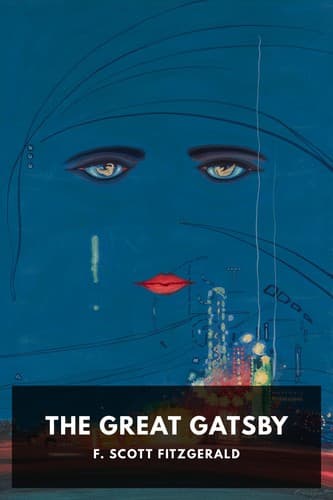
Fitzgerald hated the title The Great Gatsby and wanted to call it 'Trimalchio in West Egg' or 'Under the Red, White, and Blue,' but his editor Maxwell Perkins talked him out of both alternatives. The cover art, a pair of eyes and lips floating over a blue night cityscape, was painted by Francis Cugat before the novel was finished, and Fitzgerald liked it so much that he wrote the billboard imagery of Doctor Eckleburg's eyes into the text. The novel sold fewer than 25,000 copies in Fitzgerald's lifetime.
Parent Note
The novel contains alcohol use throughout (set during Prohibition), an extramarital affair, a hit and run death, and a shooting. The language is literary and the content is handled with restraint, though the moral emptiness of the characters can feel bleak. There is no explicit sexual content or strong profanity. It is one of the most commonly assigned novels in American high schools and is appropriate for ages 14 and up.
Quick Facts
- Year
- 1925
- Type
- 📚 Book
- Category
- Classics / Literature
- Age Group
- Teens (Ages 14–17)